It's the glossiest kind of lie:
Written on black vinyl and spun out
With needles, the warm sound
Of all the old singers insisting
You are not alone.
Thursday, February 10, 2011


Thursday, January 20, 2011
Fun with Research
I started doing more research into novel #3 yesterday--which is putting the cart WAY ahead of the horse when I have about 100 pages left to write for novel #2, but when I need to put so much into the cart before the horse can be hitched, this is a good way to spend time. The facts are slightly different than I want them to be, but I'll change them as needed, which is the convenient thing about being a fiction writer. Facts serve story, not the reverse.
Cool facts about Moscow AKA Paradise Valley--or, for my purposes, simply "Paradise."
A visitor in 1880 described Moscow as "just a lane between two farms with a flax field on one side and a post office on the other." During the next five years the town grew to a population of 300 and a branch of the Oregon Railroad and Navigation Co. (Union Pacific) linked Moscow to the rest of the country.
(Wikipedia, Moscow, Idaho, 1-19-11)
Moscow was made Latah County seat and in 1889 Moscow became the site for Idaho's land grant college, the University of Idaho. In exchange, Moscow had to agree to drop its support for the movement to join Washington in statehood. Latah County may be the only county ever formed by an act of Congress.

I *love* this history. There is so much humanity in it--so much negotiation and intrigue. I keep coming back to "you stop trying to join Washington and we'll give you a university." I want to know about time zones, now. Moscow and northern Idaho runs on a different clock than the South--we run on the clock of the Western states rather than that of the Mountain states. There's a rapids on the Salmon river which I've traveled many times named "time zone." When did it become the case, I wonder, that Moscow became an hour ahead of Boise? Curiouser and curiouser. I can't want to visit the Historical Society and Latah Co library next time I'm in Moscow to learn more.
Wednesday, January 19, 2011
Paradise
Paradise was nothing like he expected. For one thing, it was brighter. Sunlight stretched the blue sky high and thin and lit every dark hill. Also, there was more pine, and where the pine was cleared, wheat and peas grew profusely. There were more cattle and more horses than version of heaven he had ever conjured.
“Hog Heaven” someone told him. That had been the name because the pigs loved the Camas bulbs that grew everywhere, but they soon found that the fertile soil was more generally Providential, and changed the name accordingly.
Of course, there was no rail line yet to Paradise. Perhaps that was fitting. Paradise was only to be reached by stagecoach and uneven roads. “Narrow is the path,” Peter thought as the coach jolted in yet another rut, but he knew, too, that this Paradise held no guarantees of happiness.
A sudden and savage gust of September wind hit the side of the coach like a punch to the gut, and outside the un-curtained windows, dirt devils ran along the road. A hawk screeched above, voicing his irritation as the uncertainty in the currents he road. No, this Paradise was beyond anything Peter would have imagined.
Sunday, January 16, 2011
Notes on a Cowgirl
Somewhere between this
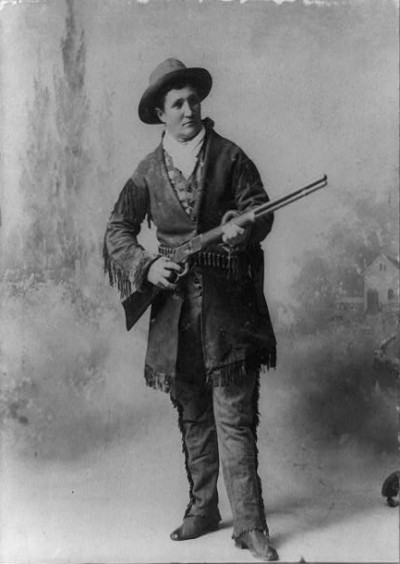
and this
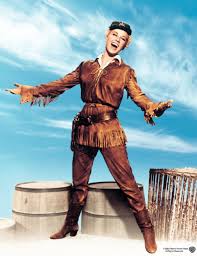
and this
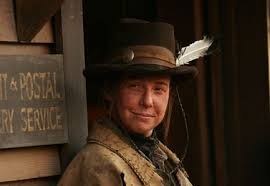
there was a cowgirl. Her name was Jane.
Her name was Calamity--which I like better. It serves my purposes.
We've been inventing cowboys and cowgirls since the first cowboys and cowgirls existed to re-invent. Mine will be attractive. Mine will be distant. The leather she wears will have metaphorical significance. Leather always does.
Enough with short sentences because what we need here is a level of complexity. Nuance. (The shortest sentence of all, but incomplete.) The stereotype will be all too easy to fall into, and I don't want another Sharon Stone or Drew Barrymore or Jane Fonda cowgirl. What I want is, in fact, more cowboy than cowgirl, because I want to shun all the gendered assumptions of weakness. What I need is more calamity than jane but more control than calamity.
The foil, of course, will be my railway novelist: a man who keeps cats. He is easier to nuance. My first attempt at his character:
Peter spent most of the trip from Chicago to Paradise missing his cat. She had been a standard black tabby with mustard yellow eyes and a torn right ear, the type of cat one might find anywhere on any street. Even in Chicago, his neighbors found it strange that he should have taken her in. She was a stray, flea-ridden kitten when he found her thirteen years earlier, inexplicably alone and quivering in the drainpipe of his boarding house. He knew he should leave her, as anyone would, to feed the local dogs. Instead, he picked her up on impulse and dropped her into his pocket, where, of all things, she began to purr. He hadn’t known then what he would do with her—Mrs. Vincent, the owner of the house and his housekeeper, would surely not like an animal in the house—but he cast thoughts of Mrs. Vincent momentarily aside, washed the surprisingly complacent kitten in a basin of warm water, and fed her warm milk. A week later, he was surprised to find himself so ridiculously attached to the little beast that he found a new room to rent (in a decidedly rougher part of town, at an increased rate) rather than meet Mrs. Vincent’s demand that he give her up.
Over the years, the two had spent many a quiet evening together. She would greet him when he came home from the press, and he would feed her cheap canned sardines that left his fingers slightly yellow and smelling of fish, in spite of his cat’s careful cleaning. The memory of her prickly tongue scouring the groves of his fingertips now brought the ache of her loss to him afresh. He knew now, just as he had known thirteen years ago, that it is absurd to love a cat. They are foreign creatures. One look in her eyes with their vertical pupils dilated in the lamp light reminded him that she was nothing like him. Yet that was what fascinated him most. Cats looked foreign and surprised one with their familiarity. Humans seemed familiar, and shocked one with their alien nature.
Perhaps my cowgirl has an element of cat, but only in ounces, not pounds. Much drafting still to go on the characters for this one... (Luckily, New Brighton is purring along.)
and this
and this
there was a cowgirl. Her name was Jane.
Her name was Calamity--which I like better. It serves my purposes.
We've been inventing cowboys and cowgirls since the first cowboys and cowgirls existed to re-invent. Mine will be attractive. Mine will be distant. The leather she wears will have metaphorical significance. Leather always does.
Enough with short sentences because what we need here is a level of complexity. Nuance. (The shortest sentence of all, but incomplete.) The stereotype will be all too easy to fall into, and I don't want another Sharon Stone or Drew Barrymore or Jane Fonda cowgirl. What I want is, in fact, more cowboy than cowgirl, because I want to shun all the gendered assumptions of weakness. What I need is more calamity than jane but more control than calamity.
The foil, of course, will be my railway novelist: a man who keeps cats. He is easier to nuance. My first attempt at his character:
Peter spent most of the trip from Chicago to Paradise missing his cat. She had been a standard black tabby with mustard yellow eyes and a torn right ear, the type of cat one might find anywhere on any street. Even in Chicago, his neighbors found it strange that he should have taken her in. She was a stray, flea-ridden kitten when he found her thirteen years earlier, inexplicably alone and quivering in the drainpipe of his boarding house. He knew he should leave her, as anyone would, to feed the local dogs. Instead, he picked her up on impulse and dropped her into his pocket, where, of all things, she began to purr. He hadn’t known then what he would do with her—Mrs. Vincent, the owner of the house and his housekeeper, would surely not like an animal in the house—but he cast thoughts of Mrs. Vincent momentarily aside, washed the surprisingly complacent kitten in a basin of warm water, and fed her warm milk. A week later, he was surprised to find himself so ridiculously attached to the little beast that he found a new room to rent (in a decidedly rougher part of town, at an increased rate) rather than meet Mrs. Vincent’s demand that he give her up.
Over the years, the two had spent many a quiet evening together. She would greet him when he came home from the press, and he would feed her cheap canned sardines that left his fingers slightly yellow and smelling of fish, in spite of his cat’s careful cleaning. The memory of her prickly tongue scouring the groves of his fingertips now brought the ache of her loss to him afresh. He knew now, just as he had known thirteen years ago, that it is absurd to love a cat. They are foreign creatures. One look in her eyes with their vertical pupils dilated in the lamp light reminded him that she was nothing like him. Yet that was what fascinated him most. Cats looked foreign and surprised one with their familiarity. Humans seemed familiar, and shocked one with their alien nature.
Perhaps my cowgirl has an element of cat, but only in ounces, not pounds. Much drafting still to go on the characters for this one... (Luckily, New Brighton is purring along.)
Sunday, January 2, 2011
This morning I made a rib cage by accident

I stuffed it with apples and sprinkled it with sugar and fed it to my children. This is not disturbing. The knife through the pastry, the cracking of sugar crust: this is what feeds, what creates. A rib cage for a rib cage. A breath for a breath.
The accident was remembering. While my head thought "breakfast," my hands thought "pulmonary" and brought me aware.
There are things the body knows. Sweetness, for example, which exists only where tongues can recognize it. And now, mindlessly folding and slashing pastry, my hands surprise me not at the moment of creation but after, when I pull open the oven and slide it, piping hot, to board.
As I looked, the steam lifting through vents kissed my cheek. It is no dark thing to build a ribcage for breakfast.

Thursday, December 30, 2010
Old Kitchen
They moved towards the darkness, feeling their way forward with their feet as they directed the dim beam of the flashlight around the wall. Unless they pried more wood from the walls, there was nothing in the living room. Robert turned towards the pitch dark doorway that led to the kitchen, but Jerome hesitated. “Come on,” Robert said.
Jerome took a small step forward and paused. “What do you think is in there?”
“I don’t know.”
“What if it’s rat city?”
“I thought you weren’t afraid of any of this stuff.”
“I’m not.”
“You were the one who got us under the plywood in the first place.”
“That was before I knew there were rats. I can take one or two, but what if it’s crawling with them.”
“I don’t see why it would be. I bet the food’s been gone for years.” Robert walked over to where the dead rat lay and picked up the chunk of concrete. “If there are any rats, we’ll be ready.”
“Give it here,” said Jerome. “You aren’t the only one who can kill a rat.”
“Yeah?”
“Yeah.” Jerome didn’t sound like he was fully convinced, but taking the concrete, he turned and, without another moment of hesitation, walked through the doorway.

The flashlight's beam reflected dully off the broken windows blacked out by plywood. The glass was filthy, covered in years of unwashed dirt and cobwebs.
Jerome took a small step forward and paused. “What do you think is in there?”
“I don’t know.”
“What if it’s rat city?”
“I thought you weren’t afraid of any of this stuff.”
“I’m not.”
“You were the one who got us under the plywood in the first place.”
“That was before I knew there were rats. I can take one or two, but what if it’s crawling with them.”
“I don’t see why it would be. I bet the food’s been gone for years.” Robert walked over to where the dead rat lay and picked up the chunk of concrete. “If there are any rats, we’ll be ready.”
“Give it here,” said Jerome. “You aren’t the only one who can kill a rat.”
“Yeah?”
“Yeah.” Jerome didn’t sound like he was fully convinced, but taking the concrete, he turned and, without another moment of hesitation, walked through the doorway.
The flashlight's beam reflected dully off the broken windows blacked out by plywood. The glass was filthy, covered in years of unwashed dirt and cobwebs.
Robert Flannigan: Talking Himself Out of a Stake Out
Consider the rat: how you killed it by hucking an old bit of concrete. You hadn't guessed the power of your arm. You hadn't calculated the fulcrum of it, the length it gained this year as you turned thirteen and stretched towards man-size. Everything has felt awkward lately, but not that throw. And now, contemplating a way to find what's missing (a brother--no small thing), you confront the fact that maybe what is required is not a stakeout after all. Rats watch from shadows, but you? You are a killer of rats--an inadvertent killer but a killer nonetheless--which is not such a shadow-thing as it sounds. Concrete: that which can be touched.
Knock and ask. There is no rock her mother can sling so very hard. Go on and ask her where your brother is and why he left.
Knock and ask. There is no rock her mother can sling so very hard. Go on and ask her where your brother is and why he left.
Subscribe to:
Posts (Atom)