My lifelong dream, the goal for which I've long yearned and pined, has always been to eat like a teenage boy and not gain weight. Unfortunately, I was not born that way. I have never been able to look at a pumpkin pie without imagining what it would be like to eat the whole thing at one sitting, just me, the pie, a fork, and good dollop of whipped cream.
Alas, it is not to be. As much as I love food, I've always had to cut myself off before things get out of hand... and then run several miles to try to work off whatever damage I did before the cut off. Even still, I'm still more soft than lean.
According to the common wisdom, it should be a blessing that I can write my fantasies, that I can live them vicariously through my invented characters. But I'm working right now to write a fourteen year old male speaker, and I gotta say, if I'm doing this right, if I'm fully imagining my character and his experience, all it does is make me hungry.
There's a metaphor there somewhere. Something about artistic hunger. Something about striving. Something about intensifying unfulfillable desire through language.
Lately, I've been wanting to buy some work by Jess Walter, whose story in the latest Best American Short Stories absolutely blew me away. I feel like this is a writer I always should have known. He's from Spokane, for goodness sake! How could I have not always been reading his work? I want to start making up for that right now, but MAN. Where to start? I'm scrolling through his novels, and the dude has been prolific.
Staring at the list of his books has made me hungry in a different way. Hungry to write, to revise, to finish and start again. That, at least, is a hunger I can satisfy by writing. May we all stay hungry, my friends.
Showing posts with label fiction writing. Show all posts
Friday, April 5, 2013
Tuesday, March 19, 2013
I'm Late! I'm Late!
OK, so I haven't put up my weekly post yet, and the promise I made myself was that I would at least post a writing prompt every week, even when I was slugged down by life and didn't have a chance to write a longer post. This week's prompt is inspired by the fact that I missed my deadline, and by Alice in Wonderland.
As you no doubt recall, Alice is lazing in the field when she chases the white rabbit, who's running late, down his rabbit hole. Here's the prompt: Write a character who appears somehow average at first but whose voice reveals him/her to be anything but. This character will chase his/her inverse--someone who appears strange but turns out to be concerned with mundane affairs--and the chase will result in a spectacular story, something wholly unexpected.
Good luck, my friends!
As you no doubt recall, Alice is lazing in the field when she chases the white rabbit, who's running late, down his rabbit hole. Here's the prompt: Write a character who appears somehow average at first but whose voice reveals him/her to be anything but. This character will chase his/her inverse--someone who appears strange but turns out to be concerned with mundane affairs--and the chase will result in a spectacular story, something wholly unexpected.
Good luck, my friends!
Saturday, March 9, 2013
If It Hadn’t a Been For That Horse: Semi-Connected Thoughts on Image and Strangeness
1. There’s a Louis Black stand-up routine in which he rants
about two girls he overhead talking in a restaurant. One had said to the other,
“If it hadn’t a been for that horse, I would have never made it through
college.” Black did not have the opportunity to ask what this dropped phrase
meant, and it drove him nuts that he would never find out. Like so much
language, it dropped into his ear context-free. Worse, he could not imagine any
context in which the statement made sense.
2. On an Air Schooner podcast, an interviewee discusses
writing ekphrastic poems. She says, it isn’t enough to write about art from the
outside; ekphrasis at its best imagines a way into the artwork.
3. Yesterday morning, I had the pleasure to attend an AWP
panel on Larry Levis, put together by poet Joshua Robbins, whose book Praise Nothing has just been released.
One of his fellow panelists, Kathy Fagan, talked about the Levis poem “Sensationalism,”
collected in Winter Stars, an
ekphrastic poem responding to Josef Koudelka photograph of a man talking to a
horse. It struck me as a perfect example of a writer imagining himself in, as
Levis begins to imagine the absent context back into the photo. He writes, “I
begin to believe that the man’s wife & children/ Were shot & thrown
into a ditch the week before this picture,” and continues his imaginative
flight from there.
4. As writers, we strive to find what Eliot called the
“objective correlative”—the concrete image that captures an abstract emotion
and thus creates that unnamed emotion in the reader. It strikes me now that
there is an implied formula here: 1) Locate emotions you want to write about,
2) Substitute things to create that you hope will emotion, 3) Remove traces of
abstraction so the images can do their work.
What I’m wondering now is whether this formula is accurate.
It seems to me what makes Levis’s poem so successful is that he finds the strange image, the one without context,
the one that has no implied response, and then contextualizes its strangeness
into his own life’s story—the story with which he is most deeply familiar and with
which he makes the reader familiar as well. I want to make a connection here to
Russian critic Victor Shklovsky who said we must make the strange familiar and the
familiar strange, but the interplay here is more complex. Strangeness and
familiarity are intertwined, perhaps even parasitic.
5. Levis writes, “Once, I was in love with a woman, &
when I looked at her/ My face altered & took on the shape of her face.” He
tells us, “She went mad, waking in tears she mistook for blood.” The familiar,
the strange, the imaginative leap from self to not self, the inability to
recognize what we make.
6. Today, I want to find a piece of strangeness. I want to
feel along the seams of its door and then climb into it like a sports car. I
want to press the pedal to the floor and shove the gearshift hard into one
place then another as I move from second to third and upward. I want to hear
the tires of that strangeness squeal across the pavement and smell the rubber
burning under my feet. I want to drive that strangeness hard and fast until it
takes me where it always does: that place where horses speak and guide us
straight into the truest and most distant part of the familiar, the place where
art lives.
Friday, March 8, 2013
Literary vs. Commercial: A Panel Report from AWP 2013
Yesterday, I went to a talk on bridging the gap between
“commercial” and “literary” novels. The speakers (Ed Falco, Julianna Baggott,
Lisa Haines, and Benjamin Percy) were phenomenal. They were the kinds of
writers you want to be friends with so you could sit over beers late at night
talking about favorite books. They were all that a panel should be—funny and insightful,
approachable but authoritative—and they made a number of comments that I’ve
been mulling over ever since. For example, I liked Ed Falco’s point that we
should not be judging books by genre but by quality. He rightly argued that
there are badly written literary genre books and well-written commercial ones,
and that the quality of goodness or badness in the writing itself (rather than
genre) should determine how we judge it. He said that the text, once done and
sent to the publisher, is not inherently “literary” or “commercial.” It’s the
author’s attitude when writing the book that puts it there. If you’re thinking
only about your needs as an author and what you feel you must write, you are
writing from a literary impulse, but if you are thinking about the audience and
how the book might appeal to them, then your impulse is commercial.
Perhaps it is because
I agree with him that I found the question and answer portion of the talk to be
a bit frustrating. A young writer behind me asked about how the
literary/commercial distinction affected the writing of the book—a good meaty
process question—and the panelists (I want to attribute this answer mostly to
Haines and Baggott, but more might have chimed in) responded that you write
what you feel you must write,
ignoring the generic question altogether. I am sure this answer feels utterly
true to them, and I’m also sure that it is the best answer available, but I
have to say, I can’t help but recognize it as an oversimplification. After all,
anyone who has written creatively has faced the wealth of artistic choices,
each beckoning with its own siren song. We have ridden through the yellow wood
and faced, over and over again, the divergent paths. Sometimes, the street
signs on those paths might as well be labeled “commercial” and “literary.” They
lead us to different ends, but it isn’t always clear which is the better path.
Let’s be honest: our choices determine the book’s audience
and the level of respect it earns with The
New York Times book review or, as Haines pointed out, a tenure committee. Haines
and Baggott both said that their most commercially successful books were left
off their academic CVs or listed as supplementary to their other work because
they knew those books would hurt rather than help their cause, and failure to
make tenure means the loss of a job and the primary means to feed the family.
I’ve been at the cross roads with my second novel now for the
past few months, trying to decide exactly how gritty, how “real,” I want this
book to be, knowing that making it too gritty may not appeal to young adult
readers who are likely to be its primary audience. The creative genies have yet
to come to tell me which path I should take, and this fence rail has long
become uncomfortable.
Who was it who said “the truth is rarely pure and never
simple?” That’s the message I wish the panel had given the young writer in the
audience struggling at her own crossroads. And maybe if they hadn’t been on the
spot, under pressure to give the quick answer, they would have. Or maybe I am
projecting too much. Maybe the choices have always been clearer for them.
Haines and Baggott, after all, are talented and prolific—far more so than I am.
Maybe they don’t get stuck on these questions as I am and have been. Maybe they
don’t wallow in indecision. Maybe that’s the heart of genius.
Since I am not a genius, though, I will simply say this to
that fellow writer and struggler who asked her bold question: many of us share
your doubt. The answer Baggott and Haines gave is undoubtedly right—we must determine
the road by being true to our work. Yet I come back to Falco (silent during
this portion of the Q&A) who said that it is during process that we find
ourselves following a literary or commercial impulse. Sometimes, those two
masters give contradictory orders, and the writer must determine which s/he
serves. The choice is rarely pure and never simple.
Saturday, February 23, 2013
Donkey Spatula
My students were feeling their oats last Wednesday. As often happens in a writing workshop, the creative energies bounced off one another, colliding and colluding, building into a sort of fervid silliness. Wednesday, this silliness was taking the form of random word pairings and uproarious laughter that was eating into the start of our class. "We have to get to work," I told them, feeling that I had better take charge lest someone lose precious workshop time.
"We are working," the students replied. "We're being creative."
"No," I told them. "Putting random ideas together is not creative. It's just absurdity. I can't say 'donkey spatula' and consider myself creative. To be creative, the two words must come together to create something."
I should be crediting someone for this idea because I know it is not original with me, but my mind cannot lay its finger on the name. (Gardner? Roethke? Readers, you'll help me out in the comments section, won't you?) Nevertheless, the distinction is an important one. Two disparate ideas yoked together by force doesn't necessarily create something. It's the poet who puts the disparate together in a way that becomes harmonious and enlightening, that makes the whole more than the sum of its parts. The words might create an idea or a setting or a character or a voice or perhaps even a sound, but unless something is created by the seemingly random pairing, then it has failed its work.
Our class has a running list of mottos we should put on class tee shirts. I'd like to nominate "donkey spatula" as a tee shirt idea and a reminder to all of us that creating is harder and nobler work than it may seem--but I'd like to nominate it, too, as a celebration of the silliness that allows us a much needed reprieve for that work.
I'm so grateful for my students, who add levity and light to every class.
"We are working," the students replied. "We're being creative."
"No," I told them. "Putting random ideas together is not creative. It's just absurdity. I can't say 'donkey spatula' and consider myself creative. To be creative, the two words must come together to create something."
I should be crediting someone for this idea because I know it is not original with me, but my mind cannot lay its finger on the name. (Gardner? Roethke? Readers, you'll help me out in the comments section, won't you?) Nevertheless, the distinction is an important one. Two disparate ideas yoked together by force doesn't necessarily create something. It's the poet who puts the disparate together in a way that becomes harmonious and enlightening, that makes the whole more than the sum of its parts. The words might create an idea or a setting or a character or a voice or perhaps even a sound, but unless something is created by the seemingly random pairing, then it has failed its work.
Our class has a running list of mottos we should put on class tee shirts. I'd like to nominate "donkey spatula" as a tee shirt idea and a reminder to all of us that creating is harder and nobler work than it may seem--but I'd like to nominate it, too, as a celebration of the silliness that allows us a much needed reprieve for that work.
I'm so grateful for my students, who add levity and light to every class.
Friday, February 15, 2013
There are many things I'm good at...
...but blog design is not one of them.
This week, my publishers at New Rivers Press sent me my cover design, giving me the first glimpse of what my novel will look like when it comes out in October. (Squee!!) I decided that, now that I have the art, I'd better redesign the blog to match, hopefully bringing the blog design more up to date along the way.
I'm no graphic designer, though, and I'm afraid it shows. I see how things could be improved but have no clue on how to improve them. I guess this is why it's my job to write the books and someone else's job to make a beautiful cover.
So, for this week, rather than a reflection on writing, I thought I would offer this writing prompt for a story, poem, or screenplay:
Write about a character whose heart's desire is to do a job well, but who has no talent whatsoever for that job. Let the job be one that others would see as mundane or easy. Let the character have another talent, perhaps one that would be lucrative, but let that talent be ignored or dismissed. Your character can't see how what s/he's good at is any help at all. The job has become his/her sole focus.
This week, my publishers at New Rivers Press sent me my cover design, giving me the first glimpse of what my novel will look like when it comes out in October. (Squee!!) I decided that, now that I have the art, I'd better redesign the blog to match, hopefully bringing the blog design more up to date along the way.
I'm no graphic designer, though, and I'm afraid it shows. I see how things could be improved but have no clue on how to improve them. I guess this is why it's my job to write the books and someone else's job to make a beautiful cover.
So, for this week, rather than a reflection on writing, I thought I would offer this writing prompt for a story, poem, or screenplay:
Write about a character whose heart's desire is to do a job well, but who has no talent whatsoever for that job. Let the job be one that others would see as mundane or easy. Let the character have another talent, perhaps one that would be lucrative, but let that talent be ignored or dismissed. Your character can't see how what s/he's good at is any help at all. The job has become his/her sole focus.
Friday, January 11, 2013
Pursuing Endings
My ten year old daughter wants to be a writer, and we talk about writing a lot. The other day, she was telling me about a short story collection she admires. "The ending lines are so good," she told me, "that sometimes I take them for my own stories."
I closed my eyes and bit back the lecture on intellectual property. She's ten. It can wait. Instead what I said was, "don't you think, though, that what makes an ending line really good is all the sentences leading up to it? I mean, doesn't the story have to earn its ending? If your stories are different than that writer's stories, don't they need different last lines? your own last lines?"
Easy for me to say. Lately, my project has been to revise my 2nd novel, a novel whose ending needs major work. As I'm reading, I'm trying to decipher my own tracks, to determine where they might lead. I know I've stopped short somewhere along the way, but the snow looks pristine all around, and I don't know where I've been leading myself.
I'm also trying to find chapters within this novel-in-progress that might work as stand-alone stories. I've got two in circulation right now, and what's my primary worry about both? The endings. In each case, I've revised them to try to achieve a little more closure (for lack of a better word) so that they feel like something that has ending, rather than a piece of a long story building up to another end altogether.
I've been reading a ton of short fiction as I do this, looking admiringly at how nuanced good writers are in their endings, how gracefully they let us go, allowing us to close the story and feel done with it, even as it haunts us. In good stories, the writers earn their last words.
And the best stories start earning their ending with the very first line, which is not to say that they're circular or "pat." I'm not talking about the gimmick ending here where the writer circles back to the same line or image and says "ta-da." Good openings feel subtle and effortless--a sure sign that a writer has done a hell of a lot of work.
Part of me wishes I could end this blog entry with a nifty formula or tips for writing good endings, but if I believed writing could be so easily reduced to formulas and tips, I wouldn't be doing it for a living. It's the hunt, the following of the tracks, that makes the job so interesting in the first place.
I closed my eyes and bit back the lecture on intellectual property. She's ten. It can wait. Instead what I said was, "don't you think, though, that what makes an ending line really good is all the sentences leading up to it? I mean, doesn't the story have to earn its ending? If your stories are different than that writer's stories, don't they need different last lines? your own last lines?"
Easy for me to say. Lately, my project has been to revise my 2nd novel, a novel whose ending needs major work. As I'm reading, I'm trying to decipher my own tracks, to determine where they might lead. I know I've stopped short somewhere along the way, but the snow looks pristine all around, and I don't know where I've been leading myself.
I'm also trying to find chapters within this novel-in-progress that might work as stand-alone stories. I've got two in circulation right now, and what's my primary worry about both? The endings. In each case, I've revised them to try to achieve a little more closure (for lack of a better word) so that they feel like something that has ending, rather than a piece of a long story building up to another end altogether.
I've been reading a ton of short fiction as I do this, looking admiringly at how nuanced good writers are in their endings, how gracefully they let us go, allowing us to close the story and feel done with it, even as it haunts us. In good stories, the writers earn their last words.
And the best stories start earning their ending with the very first line, which is not to say that they're circular or "pat." I'm not talking about the gimmick ending here where the writer circles back to the same line or image and says "ta-da." Good openings feel subtle and effortless--a sure sign that a writer has done a hell of a lot of work.
Part of me wishes I could end this blog entry with a nifty formula or tips for writing good endings, but if I believed writing could be so easily reduced to formulas and tips, I wouldn't be doing it for a living. It's the hunt, the following of the tracks, that makes the job so interesting in the first place.
Saturday, January 5, 2013
Coming to Terms with "Voice"
When I worked at The Georgia Review, I saw plenty of examples of failed voices. A story would start in heavily misspelled vernacular, heavy with the y'alls and yokelisms we might expect from a bad actor, and I'd find myself scanning ahead quickly to see if it ever redeemed itself. They almost never did. And because I associated "voice pieces" so heavily with bad writing, the concept of voice itself became suspect. I cringed when I heard people talk about a writer finding "his/her voice," as if it were lost change in the couch cushion that had to be dug out. I figured, a writer's voice was whatever was natural, and if I had to think about it too hard, then the piece was doomed to feeling hackneyed and artifical.
Lately, though, I've realized just how wrong that assumption is. I've been listening to the New Yorker Fiction podcasts (which are free through iTunes and are, for the most part, mind-blowingly good). A few weeks back, I was listening to Eudora Welty's "Where Is the Voice Coming From?" while scrubbing my toilet, and Joyce Carol Oates, who selected and read the story, talked with New Yorker fiction editor Deborah Treisman afterward about the title and how crucial the voice was to the piece. The language seemed so natural. Welty said that she felt she knew this person because she had grown up with him. He was her neighbor, her uncle, her grocer, etc. He was a part of her community and thus a part of her--though, as the title suggests, a part that perhaps she didn't know was there and may not have wanted to acknowledge.
On Thursday, Joshua Ferris read George Saunders's "Adams" intimately into my ear while I ran around the track (again, thank you New Yorker Fiction podcast), and I felt the same impulse driving the story. The speaker's voice was crucial, as Ferris pointed out, to mediating the violence of the story, allowing it to flirt with the comedic while we are simultaneously horrified by the speaker's action. It's the same trick Burgess pulled off in A Clockwork Orange, a book I've always loved for its language, its voice.
It dawned on me just how many books I first loved for the voice of their speakers: Jane Eyre, Holden Caulfield, or more recently, Christopher John Francis Boone (The Curious Incident of the Dog in the Nightime) and just about any character by John Green. Their voices made the speakers real to me. They drew me in.
A speaker is a book's emissary. We have to like them if we're going to root for them--especially if they're as despicable as Burgess's Alec or Nabokov's Humbert Humbert. I think a part of me always recognized that voice was a part of this liking, but I've arrived at the conclusion that it's more than that, that voice is nothing less than the embodiment of personality in language.
This is perhaps what is most terrifying about finding the voice for a novel. Let's face it: most of us worry about whether we're likable enough. Do we have the necessary charisma? Are we witty enough? Can we create a character who is?
I suspect that it's this fear (that no one will like me enough) that drives my avoidance of voice-driven fiction, but, in this season of resolutions, I vow to avoid it no longer. I still believe it's inaccurate to talk about a writer finding "his voice" because that implies there is a single voice to find. The voices a writer seeks are multiple: the voices of all of those characters, the embodiment of all those personalities. In Welty's example, the killer's voice is and is not her own. Her and her speaker's language are related but not identical. Welty allows what's familiar in their common language to draw her into a vernacular of racial hatred that was not her own, and the story is terrifyingly successful as a result.
Whether they come easily or not, the best voices draw us in not because of any politician's false charm but because they feel natural and authentic, because the writer erased the footprints that got him there.
Lately, though, I've realized just how wrong that assumption is. I've been listening to the New Yorker Fiction podcasts (which are free through iTunes and are, for the most part, mind-blowingly good). A few weeks back, I was listening to Eudora Welty's "Where Is the Voice Coming From?" while scrubbing my toilet, and Joyce Carol Oates, who selected and read the story, talked with New Yorker fiction editor Deborah Treisman afterward about the title and how crucial the voice was to the piece. The language seemed so natural. Welty said that she felt she knew this person because she had grown up with him. He was her neighbor, her uncle, her grocer, etc. He was a part of her community and thus a part of her--though, as the title suggests, a part that perhaps she didn't know was there and may not have wanted to acknowledge.
On Thursday, Joshua Ferris read George Saunders's "Adams" intimately into my ear while I ran around the track (again, thank you New Yorker Fiction podcast), and I felt the same impulse driving the story. The speaker's voice was crucial, as Ferris pointed out, to mediating the violence of the story, allowing it to flirt with the comedic while we are simultaneously horrified by the speaker's action. It's the same trick Burgess pulled off in A Clockwork Orange, a book I've always loved for its language, its voice.
It dawned on me just how many books I first loved for the voice of their speakers: Jane Eyre, Holden Caulfield, or more recently, Christopher John Francis Boone (The Curious Incident of the Dog in the Nightime) and just about any character by John Green. Their voices made the speakers real to me. They drew me in.
A speaker is a book's emissary. We have to like them if we're going to root for them--especially if they're as despicable as Burgess's Alec or Nabokov's Humbert Humbert. I think a part of me always recognized that voice was a part of this liking, but I've arrived at the conclusion that it's more than that, that voice is nothing less than the embodiment of personality in language.
This is perhaps what is most terrifying about finding the voice for a novel. Let's face it: most of us worry about whether we're likable enough. Do we have the necessary charisma? Are we witty enough? Can we create a character who is?
I suspect that it's this fear (that no one will like me enough) that drives my avoidance of voice-driven fiction, but, in this season of resolutions, I vow to avoid it no longer. I still believe it's inaccurate to talk about a writer finding "his voice" because that implies there is a single voice to find. The voices a writer seeks are multiple: the voices of all of those characters, the embodiment of all those personalities. In Welty's example, the killer's voice is and is not her own. Her and her speaker's language are related but not identical. Welty allows what's familiar in their common language to draw her into a vernacular of racial hatred that was not her own, and the story is terrifyingly successful as a result.
Whether they come easily or not, the best voices draw us in not because of any politician's false charm but because they feel natural and authentic, because the writer erased the footprints that got him there.
Friday, December 21, 2012
It's a Wonderful Life: The Lost Image
Unlike most Americans, I didn't grow up watching It's a Wonderful Life every Christmas. In fact, I didn't see the movie until I was in my late twenties. Perhaps because of this delay, I remember the first clip I ever saw vividly: I was watching some morning news program, undoubtedly around the holidays, and the reporters had gone to visit the pool from the classic 1946 holiday film because it had just been refurbished. As in the movie, the gleaming gym floor retracted to reveal a multi-laned swimming pool. I was struck by how strange and cool that was, and when I watched the movie, I was watching especially for that crazy floor.
You remember the scene, right?
No?
That's the amazing thing. It seems very few people do. I've talked to people who grew up their whole lives watching that movie and talked to them specifically about that moment, and, without fail, they look at me a little baffled or a little pityingly, and say something like, "you must be thinking of another movie. Carrie, perhaps?"
Just in case you're in that boat, here's the scene:
Wild, right? And memorable! Or, at least, it should be memorable... so why isn't it?
With the holidays coming and talk turning to holiday movies, I once again find myself thinking about this. The pool scene sets up so much of the narrative that will follow: the couple falling into trouble, the unexpected crash, the recovery through love.
And yet, for the average viewer, it doesn't have that resonance. It blurs in with a dozen other images from the movie and so ultimately what we remember is Clarence or, more probably, the poor child actor delivering her stilted lines, "Teacher says, 'every time a bell rings, an angel gets its wings.'"
Surely, this should be the throw-away moment. It's not nearly so wonderfully strange as that evocative swimming pool. We've seen dozens of lisping children and adoring adults. We've seen the happy ending. Yet this line, this scene seems to be what sticks.
What makes an image resonate? Why is one so readily forgotten while another sticks in our mind like Christmas tree sap sticks to our hands, refusing to easily wash away?
I first thought perhaps it might have to do with relevance. Perhaps the story of redemption here is more important than the initial fall.
I thought next that perhaps it had something to do with placement. We remember best what happens near the film's end.
I dismissed both of these ideas, though, because neither holds true for one of my other favorite Christmas movie images: the leg lamp in A Christmas Story.
The leg lamp is no more relevant to the central narrative of A Christmas Story is than the swimming pool is to the narrative It's a Wonderful Life. In fact, if anything, it's less so. We need Mary and George to fall in love if George is to have family at the heart of his crisis, but we don't need the father to own a lamp in order for Ralphie to get or not get his longed for Christmas present. So much for narrative significance.
As for placement, the leg lamp appears in at the middle, not the end of the film, yet if anything, we're far more likely to forget the Chinese restaurant Christmas dinner scene that closes the movie than we are to forget Ralphie's father's "major award." Clearly, an image's significance and memorability did not rely on when it appears.
The theories I'm working on now have to do with tone and the familiarity, for lack of a better word, evoked by the strange object. Here are the ideas:
Tone: Part of the reason we displace the memory of the swimming pool scene onto other films is that it seems out of sync with our memory of the tone and theme of It's a Wonderful Life. That movie is about suicide, forgiveness, and redemption, not about dancing schtick and surreal under-floor swimming pools.
The leg lamp, on the other hand, seems perfectly in harmony with the theme of repeatedly stymied and unspoken desires that drives Ralphie's desire for a Red Ryder Carbine-Action, Two-Hundred Shot Range Model Air Rifle with a compass in the stock and this thing that tells time. The discord in the family and the comedic tone through which it's filtered is summed up in the soft glow of electric sex that shines through the living room window. In other words, the tone of the image needs to be in harmony with the overall tone.
Familiarity evoked by the strange: A strange image has to evoke a sense of familiarity for the audience to connect with it. The world created in It's a Wonderful Life is a surreal one: angels walk among us and talk people down from bridges. In the context of the film, this is a necessary strangeness. Viewers resonate with the idea that divine intervention might help a man turn from his own despair. The swimming pool, however, fails to connect. It may be a real object from our world, but its strangeness is not necessary to the audience in the way angels are. We haven't taken that plunge while dancing, and we don't know if it's essential that George and Mary do for their love to culminate. The pool under the floor feels less familiar than angels.
By contrast, the leg lamp, as strange as it is, starts an argument between Ralphie's parents that feels familiar to most of us. We've watched our parents struggle with competing and incompatible desires. The strange, then, must create the familiar.
I can't help but feel, though, that the swimming pool under the floor is not done with me yet. As I try to plant my feet firmly on a theory of what makes an image work, I can feel the watery fluidity of imaginative lurking just underneath, inviting me to dive in and swim or drown or dance.
You remember the scene, right?
No?
That's the amazing thing. It seems very few people do. I've talked to people who grew up their whole lives watching that movie and talked to them specifically about that moment, and, without fail, they look at me a little baffled or a little pityingly, and say something like, "you must be thinking of another movie. Carrie, perhaps?"
Just in case you're in that boat, here's the scene:
Wild, right? And memorable! Or, at least, it should be memorable... so why isn't it?
With the holidays coming and talk turning to holiday movies, I once again find myself thinking about this. The pool scene sets up so much of the narrative that will follow: the couple falling into trouble, the unexpected crash, the recovery through love.
And yet, for the average viewer, it doesn't have that resonance. It blurs in with a dozen other images from the movie and so ultimately what we remember is Clarence or, more probably, the poor child actor delivering her stilted lines, "Teacher says, 'every time a bell rings, an angel gets its wings.'"
Surely, this should be the throw-away moment. It's not nearly so wonderfully strange as that evocative swimming pool. We've seen dozens of lisping children and adoring adults. We've seen the happy ending. Yet this line, this scene seems to be what sticks.
What makes an image resonate? Why is one so readily forgotten while another sticks in our mind like Christmas tree sap sticks to our hands, refusing to easily wash away?
I first thought perhaps it might have to do with relevance. Perhaps the story of redemption here is more important than the initial fall.
I thought next that perhaps it had something to do with placement. We remember best what happens near the film's end.
I dismissed both of these ideas, though, because neither holds true for one of my other favorite Christmas movie images: the leg lamp in A Christmas Story.
The leg lamp is no more relevant to the central narrative of A Christmas Story is than the swimming pool is to the narrative It's a Wonderful Life. In fact, if anything, it's less so. We need Mary and George to fall in love if George is to have family at the heart of his crisis, but we don't need the father to own a lamp in order for Ralphie to get or not get his longed for Christmas present. So much for narrative significance.
As for placement, the leg lamp appears in at the middle, not the end of the film, yet if anything, we're far more likely to forget the Chinese restaurant Christmas dinner scene that closes the movie than we are to forget Ralphie's father's "major award." Clearly, an image's significance and memorability did not rely on when it appears.
The theories I'm working on now have to do with tone and the familiarity, for lack of a better word, evoked by the strange object. Here are the ideas:
Tone: Part of the reason we displace the memory of the swimming pool scene onto other films is that it seems out of sync with our memory of the tone and theme of It's a Wonderful Life. That movie is about suicide, forgiveness, and redemption, not about dancing schtick and surreal under-floor swimming pools.
The leg lamp, on the other hand, seems perfectly in harmony with the theme of repeatedly stymied and unspoken desires that drives Ralphie's desire for a Red Ryder Carbine-Action, Two-Hundred Shot Range Model Air Rifle with a compass in the stock and this thing that tells time. The discord in the family and the comedic tone through which it's filtered is summed up in the soft glow of electric sex that shines through the living room window. In other words, the tone of the image needs to be in harmony with the overall tone.
Familiarity evoked by the strange: A strange image has to evoke a sense of familiarity for the audience to connect with it. The world created in It's a Wonderful Life is a surreal one: angels walk among us and talk people down from bridges. In the context of the film, this is a necessary strangeness. Viewers resonate with the idea that divine intervention might help a man turn from his own despair. The swimming pool, however, fails to connect. It may be a real object from our world, but its strangeness is not necessary to the audience in the way angels are. We haven't taken that plunge while dancing, and we don't know if it's essential that George and Mary do for their love to culminate. The pool under the floor feels less familiar than angels.
By contrast, the leg lamp, as strange as it is, starts an argument between Ralphie's parents that feels familiar to most of us. We've watched our parents struggle with competing and incompatible desires. The strange, then, must create the familiar.
I can't help but feel, though, that the swimming pool under the floor is not done with me yet. As I try to plant my feet firmly on a theory of what makes an image work, I can feel the watery fluidity of imaginative lurking just underneath, inviting me to dive in and swim or drown or dance.
Friday, December 7, 2012
Writing Slowly
or, "Sometimes, it's hard to love revision" (to be sung to the tune of "Stand By Your Man")
Lately, I've been knee deep in project revisions. Final edits for Borrowed Horses went to my publisher Monday, and I'm back to working on New Brighton, the novel I took to Sewanee Writers' Conference this past summer. Back at the end of July, I thought I'd be able to come home, knock out the revision to the book in a month of so, tinkering and tightening, so that I could begin querying before school got too crazy. As fall grew older and we headed into November, my students inspired me with their NaNoWriMo writing goals (a 50,000 word novel draft in a month), and I thought perhaps I could finish my revision before December hit. Now, I'm wondering if a goal of finishing before the end of Christmas break is overly optimistic.
The thing is, though, I really, really like the new stuff I'm writing for the novel, even though it's taking me so much more time to write it than I'd planned. I'm taking more emotional risks. The scenes are more immediate and intense. Over the course of my writing life, I've heard a lot of writers say you have to "trust the process," and for the first time in my life, I feel like I might know what that means.
(The picture on the sidebar is what I look like when I'm outside playing in the snow. The picture above is what I look like when I'm writing.)
My students know that I'm a big believer in the hand-written journal. I make them all keep one as part of their fiction writing course grade. The want to type them on computers and iPads, and I refuse. For one semester only, they have to try things my way. "Hand writing accesses a different part of your brain," I tell them, both because I know this to be true and because in this NaNo world, they need someone to remind them to slow down.
This year, I've been reminding myself that as well, using my journal far more extensively as I revise than I ever have in the past. And you know what? I was right. It may feel slow and inefficient to close the computer, but most of the stuff I'm most proud of in this re-write is coming straight out of the journal.
This morning, for instance, I was working on a scene in which the protagonist's mother returns to work for the first time in twenty years. Reading the scene on the computer screen, I could tell it was happening too quickly. A mother returning to work is a big thing. It needed space to become that, but I couldn't see where to put it in the draft as written. So instead of trying, I highlighted the passage on the screen ("he knew she was nervous"), giving myself an idea to riff off of and a place to come back to, and then I closed my laptop and opened my journal and wrote for an hour about only that one idea in that one line. And then I opened my laptop again and wrote this post. Why? Because the journal stuff is *good.* Because I now have the details to make the crisis real. Because I'm excited again. Because when I open my journal, I'm discovering, and it's what I love best about writing and what makes it live and breathe.
My fellow fiction writer Matt Bell posted this quotation on Facebook this morning:
"I write slowly because I write badly. I have to rewrite everything many, many times just to achieve mediocrity. Time can give you a good critical perspective, and I often have to go slow so that I can look back on what sort of botch of things I made three months ago. Much of the stuff which I will finally publish, with all its flaws, as if it had been dashed off with a felt pen, will have begun eight or more years earlier, and worried and slowly chewed on and left for dead many times in the interim." —William Gass
I'm going to sign off with that quotation, one I hope to hold in my mind throughout the end of the revision of New Brighton--however long it takes me.
Friday, November 30, 2012
Why Green Eyes Are A Problem in Fiction...
The short answer is this: green eyes are nearly the only eye color that exists in fiction.
True, every once in a while a character might have "ice blue" eyes or "chocolate brown" eyes or, in some rare cases (including Anne of Green Gables and Katniss Everdeen), gray eyes, but none of these colors appear with nearly the frequency of green eyes. Green eyes are everywhere. It's as if an epidemic raged though the worlds of fiction, and the only noticeable symptom was a change in eye color. Even my own beloved Jane Eyre insists on having green eyes, though Rochester calls them blue*. From pop-genre novels like Dan Brown's The Da Vinci Code to gorgeous, heart-breaking literary fiction like Aimee Bender's The Girl with the Flammable Skirt, novels seem bursting with green-eyed characters.
In a grad school workshop, I made this complaint when my major professor, Reg McKnight, began to laugh in the big-hearted way of his that made us all love him. "Why are you laughing at me?" I asked him. "I'm not," he said. "I'm laughing because I'm pretty sure I gave the main character in my last novel green eyes."
Even among the best writers, green eyes have becomes fiction's short hand for "pay attention to this person, s/he is *interesting.*" When I read that a character has green eyes, I think what I'm supposed to be picturing is something like this:
When I know full well that actual green eyes are probably closer to this:
And don't get me wrong. This is by all means an interesting eye, but is it any more inherently interesting than this eye?
Or this one?
And anyway, don't we all know that eye color no more determines a person's intelligence or charisma or abilities than their skin color does? To misquote Martin Luther King, Jr., I would like the chance to judge a character on the content of their character, not the color of their eyes.
I must add an aside here that I have no bias against green-eyed people in life, only in fiction. My husband has green eyes, and his eyes are, no doubt, among the reasons I find him so attractive... though his sideburns and inveterate love of flannel have a lot to do with it as well.
My point is this: I think as writers we have to up the ante for ourselves. If a character is interesting, we cannot attempt to show this by resorting to the least interesting of all fictional eye colors. We must instead show it in surprising but character-appropriate action and dialogue. In other words, if we want an interesting character we actually have to make an interesting character.
To prove my point, I give my student writers this challenge: write down the eye color of ten people you know well who are not in class. I then ask them to come back next time and tell me if they were right. They come back blushing, embarrassed not to know the eye color of the people whom they love best. But why be embarrassed? My students weren't paying attention to the eye color because they were paying attention to what mattered most about their friends and family. They were paying attention to the goofy way those loved ones laugh, or the way they substituted in nonsense words for curse words, or the way they rub a shoulder, or the way they pet their dog absent-mindedly as they're reading the paper, or to any other of a million gestures and quirks that show who they are and why we love them.
As writers, that's exactly what we want to be paying attention to.
------
*Note: Jane and Rochester's disagreement over her eye color is, for me, why Charlotte Bronte gets away with a green-eyed character. Whom do we trust? Is Jane unreliable? Or is Rochester just not paying very close attention to her? Either way, the disagreement isn't a throw away detail. Rather, it does some work in this narrative, suggesting more about these characters than just physical appearance.
True, every once in a while a character might have "ice blue" eyes or "chocolate brown" eyes or, in some rare cases (including Anne of Green Gables and Katniss Everdeen), gray eyes, but none of these colors appear with nearly the frequency of green eyes. Green eyes are everywhere. It's as if an epidemic raged though the worlds of fiction, and the only noticeable symptom was a change in eye color. Even my own beloved Jane Eyre insists on having green eyes, though Rochester calls them blue*. From pop-genre novels like Dan Brown's The Da Vinci Code to gorgeous, heart-breaking literary fiction like Aimee Bender's The Girl with the Flammable Skirt, novels seem bursting with green-eyed characters.
In a grad school workshop, I made this complaint when my major professor, Reg McKnight, began to laugh in the big-hearted way of his that made us all love him. "Why are you laughing at me?" I asked him. "I'm not," he said. "I'm laughing because I'm pretty sure I gave the main character in my last novel green eyes."
Even among the best writers, green eyes have becomes fiction's short hand for "pay attention to this person, s/he is *interesting.*" When I read that a character has green eyes, I think what I'm supposed to be picturing is something like this:
When I know full well that actual green eyes are probably closer to this:
And don't get me wrong. This is by all means an interesting eye, but is it any more inherently interesting than this eye?
Or this one?
And anyway, don't we all know that eye color no more determines a person's intelligence or charisma or abilities than their skin color does? To misquote Martin Luther King, Jr., I would like the chance to judge a character on the content of their character, not the color of their eyes.
I must add an aside here that I have no bias against green-eyed people in life, only in fiction. My husband has green eyes, and his eyes are, no doubt, among the reasons I find him so attractive... though his sideburns and inveterate love of flannel have a lot to do with it as well.
My point is this: I think as writers we have to up the ante for ourselves. If a character is interesting, we cannot attempt to show this by resorting to the least interesting of all fictional eye colors. We must instead show it in surprising but character-appropriate action and dialogue. In other words, if we want an interesting character we actually have to make an interesting character.
To prove my point, I give my student writers this challenge: write down the eye color of ten people you know well who are not in class. I then ask them to come back next time and tell me if they were right. They come back blushing, embarrassed not to know the eye color of the people whom they love best. But why be embarrassed? My students weren't paying attention to the eye color because they were paying attention to what mattered most about their friends and family. They were paying attention to the goofy way those loved ones laugh, or the way they substituted in nonsense words for curse words, or the way they rub a shoulder, or the way they pet their dog absent-mindedly as they're reading the paper, or to any other of a million gestures and quirks that show who they are and why we love them.
As writers, that's exactly what we want to be paying attention to.
------
*Note: Jane and Rochester's disagreement over her eye color is, for me, why Charlotte Bronte gets away with a green-eyed character. Whom do we trust? Is Jane unreliable? Or is Rochester just not paying very close attention to her? Either way, the disagreement isn't a throw away detail. Rather, it does some work in this narrative, suggesting more about these characters than just physical appearance.
Thursday, October 4, 2012
Voice
I love having caller ID. When an unknown or an 800- number comes up, I rarely answer. I figure, this saves both me and the telemarketers trying to call me quite a lot of grief. Today, though, I'm waiting for the plumber to come fix my toilet, so when the unknown number came up, I took a chance and answered, thinking it might be him.
It wasn't. The call was from somewhere in the subcontinent, from a man who claimed to represent Microsoft. He asked, how I was doing? On this side of the phone line, I gaped, unsure whether to say anything. In fact, even as naturally suspicious as I am, it took me half a minute of silent gaping to realize I needed to hang up. I didn't know if he was from Microsoft. I doubted it. Everything from the series of numbers and letters that had appeared on my phone read out to the pause while it connected us to the distance in the line suggested that maybe I shouldn't trust this situation. All this was almost tipped by one enormous fact: the fact of his voice.
The lilt of it, the pitch of it, the seeming sincerity when he asked how my day was--it all reminded me strongly of a colleague at work of whom I am quite fond. That half-moment when I didn't hang up? It was consumed with the need to remind myself that this wasn't the man I knew, and that it was OK to hang up.
Still, I was strangely shaken. I felt I'd been discourteous to a stranger--this even though I myself have worked as a telemarketer to help support my family over the summers while I was in grad school. I know from experience that a hang up isn't an insult; it's just a reason to move to the next call. But that human voice... that unique timber that no robocaller has ever replicated...
Because I'm working on manuscript revision today, it struck me how crucial this element is in writing. If I can make a voice that personal on the page, it's hard to hang up on. Our love for the sound of our fellow beings is one of the things that pulls us into story, whether we know it or not. It's what we most enjoy when we sit round a campfire and speak of ghosts. It's what makes us crave stories when we're alone and need the comfort of voice.
As writers, we're the ultimate scammers and salesmen, pitching a line we acknowledge up front to be false, and expecting emotional payment regardless. Any number of craft elements help make this possible, but I rarely give voice its due. Today, I'm rethinking this.
It wasn't. The call was from somewhere in the subcontinent, from a man who claimed to represent Microsoft. He asked, how I was doing? On this side of the phone line, I gaped, unsure whether to say anything. In fact, even as naturally suspicious as I am, it took me half a minute of silent gaping to realize I needed to hang up. I didn't know if he was from Microsoft. I doubted it. Everything from the series of numbers and letters that had appeared on my phone read out to the pause while it connected us to the distance in the line suggested that maybe I shouldn't trust this situation. All this was almost tipped by one enormous fact: the fact of his voice.
The lilt of it, the pitch of it, the seeming sincerity when he asked how my day was--it all reminded me strongly of a colleague at work of whom I am quite fond. That half-moment when I didn't hang up? It was consumed with the need to remind myself that this wasn't the man I knew, and that it was OK to hang up.
Still, I was strangely shaken. I felt I'd been discourteous to a stranger--this even though I myself have worked as a telemarketer to help support my family over the summers while I was in grad school. I know from experience that a hang up isn't an insult; it's just a reason to move to the next call. But that human voice... that unique timber that no robocaller has ever replicated...
Because I'm working on manuscript revision today, it struck me how crucial this element is in writing. If I can make a voice that personal on the page, it's hard to hang up on. Our love for the sound of our fellow beings is one of the things that pulls us into story, whether we know it or not. It's what we most enjoy when we sit round a campfire and speak of ghosts. It's what makes us crave stories when we're alone and need the comfort of voice.
As writers, we're the ultimate scammers and salesmen, pitching a line we acknowledge up front to be false, and expecting emotional payment regardless. Any number of craft elements help make this possible, but I rarely give voice its due. Today, I'm rethinking this.
Friday, August 3, 2012
Plot, Structure, Through Line
From the 2012 Sewanee Writers' Conference
The other day, I was standing in a line of writers at Sterling's waiting to get a hazelnut latte when I heard two others talking about their workshop. "How did it go?" writer #1 asked. "Great," writer #2 said. "We talked a lot about plot. You know, it's funny, but we don't tend to talk a lot about plot in writing workshops. We talk about structure, but not plot."
Yesterday, I was listing to the Tin House writing podcast as I went for my morning run, and the subject of plot came up again. Steve Almond and Aimee Bender talked over many pitfalls writers face, one of which is giving a character problems (terminal illness, dying parents, etc) out of fear that if we don't, there will be no plot. Bender quoted Ray Bradbury, "plot is no more than the foot prints in the snow left after your characters have run by." (I believe she left out the end of that quotation, which is "on the way to incredible destinations." I suspect that ending is crucial for Bradbury [ahem, dinosuars; ahem, book burning--Bradbury is not exactly plot-light], but I'll leave it aside for now.)
In my own workshop with John Casey and Christine Schutt, one of the workshop participants mentioned a narrative having a "through line." Casey asked if through line meant the same as plot and the writer answered that no, he thought it dealt more with an idea running though the work (what we might also call theme).
With all this in the air, I've been thinking about the collision and collusion of our definitions of plot, structure, and through line, so I thought I'd do a little Internet browsing this morning to see what Dr. Google had to bring to the table.
I have to admit, my own definition of "through line" (admittedly one I invented from the contexts in which I'd heard the word rather than on scholarship) has much more to do with narrative threads and arcs than strictly themes. For me, the through line is closer to one of Aristotle's unities. For him, time and space helped define the story and give it a kind of cohesion. As we've abandoned that unity and opened narrative to longer forms, we've needed to find substitute unities. Yes, a story's themes are among these threads, but I would say characters, too, can be threads running through a story. Dickens, for example, wrote a cast of characters who were related in surprising and often absurd ways. As we've become increasing suspicious of coincidence, recurring images have added another thread. Asked to define a through line, I would have said that, like any good rope, it is a braiding of all these threads and to form the line that ultimately pulls us over the narrative arc (which I'm using here as almost synonymous with plot).
Thus, for me, a through line combines elements of character, imagery, thematics, etc to pull us over this mountain:
But checking in with Wikipedia this morning, I found that my definition, though pretty, is not accurate either. It offers this:
"The through line, sometimes also called the spine, was first suggested by Constantin Stanislavski as a simplified way for actors to think about characterisation [sic]. He believed actors should not only understand what their character was doing, or trying to do, (their objective) in any given unit, but should also strive to understand the through line which linked these objectives together and thus pushed the character forward through the narrative."
Here, the through line resides strictly in character and motivation, but if we lay Bradbury's quotation ("plot is [...] the foot prints in the snow left [by] characters") alongside this, we find ourselves back at the deep and abiding relation of plot to character.
A Google request for a definition of plot added this:
Now, I realize of course that this is not how writers tend to use the word "plot," but I kind of love the idea that something subversive is going on here. Hopefully, our plots are not illegal or harmful outside of the world of the fiction (honestly, I hope my writing aspires to do more good than harm), but it seems to me that, while writers may have a plan for our book, it often feels like something outside of us, something residing in the art itself, will not always allow us to follow that plan. Our characters don't always behave themselves. The subvert and foil our best laid plans. I'll argue that this is a good thing--a sign that we've just started to make the characters complex enough. The through line may be a way to simplify their personality into something comprehensible for a actor or writer, but it should never serve to make their actions any less authentically human, and therefore, surprising.
I'm no closer to parsing these definitions into neatly defined territories than I was was when I began writing this post, but somehow, I find the blur between these elements deeply satisfying and far more useful than easy classification would be.
The other day, I was standing in a line of writers at Sterling's waiting to get a hazelnut latte when I heard two others talking about their workshop. "How did it go?" writer #1 asked. "Great," writer #2 said. "We talked a lot about plot. You know, it's funny, but we don't tend to talk a lot about plot in writing workshops. We talk about structure, but not plot."
Yesterday, I was listing to the Tin House writing podcast as I went for my morning run, and the subject of plot came up again. Steve Almond and Aimee Bender talked over many pitfalls writers face, one of which is giving a character problems (terminal illness, dying parents, etc) out of fear that if we don't, there will be no plot. Bender quoted Ray Bradbury, "plot is no more than the foot prints in the snow left after your characters have run by." (I believe she left out the end of that quotation, which is "on the way to incredible destinations." I suspect that ending is crucial for Bradbury [ahem, dinosuars; ahem, book burning--Bradbury is not exactly plot-light], but I'll leave it aside for now.)
In my own workshop with John Casey and Christine Schutt, one of the workshop participants mentioned a narrative having a "through line." Casey asked if through line meant the same as plot and the writer answered that no, he thought it dealt more with an idea running though the work (what we might also call theme).
With all this in the air, I've been thinking about the collision and collusion of our definitions of plot, structure, and through line, so I thought I'd do a little Internet browsing this morning to see what Dr. Google had to bring to the table.
I have to admit, my own definition of "through line" (admittedly one I invented from the contexts in which I'd heard the word rather than on scholarship) has much more to do with narrative threads and arcs than strictly themes. For me, the through line is closer to one of Aristotle's unities. For him, time and space helped define the story and give it a kind of cohesion. As we've abandoned that unity and opened narrative to longer forms, we've needed to find substitute unities. Yes, a story's themes are among these threads, but I would say characters, too, can be threads running through a story. Dickens, for example, wrote a cast of characters who were related in surprising and often absurd ways. As we've become increasing suspicious of coincidence, recurring images have added another thread. Asked to define a through line, I would have said that, like any good rope, it is a braiding of all these threads and to form the line that ultimately pulls us over the narrative arc (which I'm using here as almost synonymous with plot).
Thus, for me, a through line combines elements of character, imagery, thematics, etc to pull us over this mountain:
But checking in with Wikipedia this morning, I found that my definition, though pretty, is not accurate either. It offers this:
"The through line, sometimes also called the spine, was first suggested by Constantin Stanislavski as a simplified way for actors to think about characterisation [sic]. He believed actors should not only understand what their character was doing, or trying to do, (their objective) in any given unit, but should also strive to understand the through line which linked these objectives together and thus pushed the character forward through the narrative."
Here, the through line resides strictly in character and motivation, but if we lay Bradbury's quotation ("plot is [...] the foot prints in the snow left [by] characters") alongside this, we find ourselves back at the deep and abiding relation of plot to character.
A Google request for a definition of plot added this:
plot/plät/
| Noun: |
|
Now, I realize of course that this is not how writers tend to use the word "plot," but I kind of love the idea that something subversive is going on here. Hopefully, our plots are not illegal or harmful outside of the world of the fiction (honestly, I hope my writing aspires to do more good than harm), but it seems to me that, while writers may have a plan for our book, it often feels like something outside of us, something residing in the art itself, will not always allow us to follow that plan. Our characters don't always behave themselves. The subvert and foil our best laid plans. I'll argue that this is a good thing--a sign that we've just started to make the characters complex enough. The through line may be a way to simplify their personality into something comprehensible for a actor or writer, but it should never serve to make their actions any less authentically human, and therefore, surprising.
I'm no closer to parsing these definitions into neatly defined territories than I was was when I began writing this post, but somehow, I find the blur between these elements deeply satisfying and far more useful than easy classification would be.
Friday, June 22, 2012
In Defense of the Hook
It seems like it has become morally suspect to suggest that a book, essay, or story should have a "hook." The implication seems to be that it's a contrivance or a gimmick, and as such, I understand why it has become unfashionable to use the term. Still, I think there is something to be said for thinking in terms of a "hook," and so I'll try to say that something.
Perhaps the problem is the term "hook" itself, which implies the reader is a fish. The reader is not a fish. The reader is an intelligent human being with many demands on his/her time--but in abandoning the term hook, it seems like too many writers also forget this crucial fact of the reader's humanity. Too often, I see writers who seem to feel that the reader owes it to them to slog through pages or attempt to penetrate their word puzzles and mind games just because the writer bothered to write the pages in the first place.
The reader, however, owes the writer nothing. In fact, it's the reverse. If someone has been gracious enough to spend time and money to read our efforts, we owe them.
What I like about the term hook is that the metaphor implies the writer should offer the reader some morsel up front--something we can see and smell and taste just as much as we can see, smell, and taste the barbed hook itself. The writing needs to establish a reason for us readers to willingly sacrifice our time.
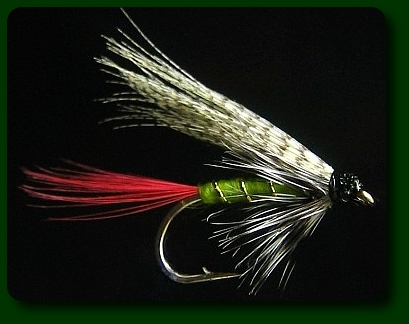
Ultimately, the hook should not be a gimmick. If it is, chances are the reader will be disappointed in the work. Readers will rightly feel cheated. Instead, the hook should offer readers a glimpse of what the rest of the piece promises to give: romance, tragedy, mystery, comedy, philosophical questions, etc. The hook establishes the art of the book. It is the offering the writer makes for the reader's time. The best hide hooks themselves because, like well-tied flies, they feel a natural part of the narrative landscape. When those lures are artfully done, I as the reader will bite every time.
------
PS. (ten minutes later)
After writing this I stumbled across Julie Ritter's poem "Ravi Shankar Hand Dip" at http://pbq.drexel.edu/pbq/archives/462 . Synchronicity?
Quick as a fishhook flared into the water,
the way hip rubs against hip intentionally
unintentional on the dance floor, furtive
as a glance at someone else’s bank
statement, palmed like a cigarette in the rain,
the fingers exploratory, an insect’s antennae,
twitching to capture texture to populate
the hinterlands of a long winter night alone,
a maneuver not catalogued by the Kama Sutra,
but full of nervy frottage, pervy wattage,
a slip of skin on skin thin as a wine glass stem
and more circumspect, harder to unpack
than a tackle box and oft-deployed in subway
cars and murky bars – that’s the hand dip.
Perhaps the problem is the term "hook" itself, which implies the reader is a fish. The reader is not a fish. The reader is an intelligent human being with many demands on his/her time--but in abandoning the term hook, it seems like too many writers also forget this crucial fact of the reader's humanity. Too often, I see writers who seem to feel that the reader owes it to them to slog through pages or attempt to penetrate their word puzzles and mind games just because the writer bothered to write the pages in the first place.
The reader, however, owes the writer nothing. In fact, it's the reverse. If someone has been gracious enough to spend time and money to read our efforts, we owe them.
What I like about the term hook is that the metaphor implies the writer should offer the reader some morsel up front--something we can see and smell and taste just as much as we can see, smell, and taste the barbed hook itself. The writing needs to establish a reason for us readers to willingly sacrifice our time.
Ultimately, the hook should not be a gimmick. If it is, chances are the reader will be disappointed in the work. Readers will rightly feel cheated. Instead, the hook should offer readers a glimpse of what the rest of the piece promises to give: romance, tragedy, mystery, comedy, philosophical questions, etc. The hook establishes the art of the book. It is the offering the writer makes for the reader's time. The best hide hooks themselves because, like well-tied flies, they feel a natural part of the narrative landscape. When those lures are artfully done, I as the reader will bite every time.
------
PS. (ten minutes later)
After writing this I stumbled across Julie Ritter's poem "Ravi Shankar Hand Dip" at http://pbq.drexel.edu/pbq/
Quick as a fishhook flared into the water,
the way hip rubs against hip intentionally
unintentional on the dance floor, furtive
as a glance at someone else’s bank
statement, palmed like a cigarette in the rain,
the fingers exploratory, an insect’s antennae,
twitching to capture texture to populate
the hinterlands of a long winter night alone,
a maneuver not catalogued by the Kama Sutra,
but full of nervy frottage, pervy wattage,
a slip of skin on skin thin as a wine glass stem
and more circumspect, harder to unpack
than a tackle box and oft-deployed in subway
cars and murky bars – that’s the hand dip.
Tuesday, April 10, 2012
A Dragon For Spec Fiction: It's been a good semester, my loves
This semester, I ventured into terra incognita. Worlds unknown and becoming known. I dabbled with magic systems, mingled with strange races, and wielded sharp blades. In short, I taught my first course on writing the speculative fiction novel. Tonight, it came, with the semester, to a bitter sweet end. These students wrote their hearts out this semester, spilling them drop by drop onto the page in the best of all possible ways. They wrote with the passion of the faithful. (There was a curious lack of dragons, but we'll let that pass.)
I've loved teaching this class, which is interesting given its history. The course has never been offered before because, though the department knew there was student interest, no faculty member particularly wanted to read multiple chapters from early drafts of speculative novels. That's just not their bag, baby. And I understand their position. I, too, am a fan of literary fiction. It's what I write and it's what I read, but I think there's something to be said for teaching speculative fiction. So I'm going to say it.
A quick list, as it were, of just a few things writing spec fiction brings out of the students:
1) Passion. The students who took this class were a self-selected group. Many have been working on spec fiction novels from their early teens. These writers were absolutely committed to the job of writing, and dedicated to finding the awesome in their stories. Their passion rejuvenated mine as well, reminding me that, after all, finding the awesome in any story *is* what it's all about.
2) Knowledge. When I teach a standard literary fiction writing class, part of my job is to educate the students about the writing that's out there. Most of the literary writing students know is dated (Faulkner, Fitzgerald, Hemingway), and I have to bring them up to speed with recent trends--something that's difficult to do in a semester when I'm also trying to teach basic writing craft and workshop their stories. In this class, however, the knowledge of the literature was reversed. They know contemporary spec fiction far better than I, so I could teach them about craft while they helped educate me and each other about the current trends in the field. I did a ton of reading to prep for this class, but the students had years of lead time to out-read me. It created a great collaborative dynamic, allowing them to really apply what they knew to the writing they were doing.
3) Willingness to be challenged. I started this class with the premise that, if they were still working on Dragonlance-style fantasy hoping that it would be good enough, they were wrong. (And yes, there were some writers who thought exactly this.) We talked at least about how the field was shifting, how electronic markets and intense competition was driving the quality of writing and invention up, and how they were going to have to be better than they imagined possible to compete. Because they had the passion and the knowledge I mentioned, they drove each other and challenged themselves to levels of extraordinary growth.
4) Invention. Every fiction writer invents, but those working in spec fiction bare a burden of world building that I am happy to forego. The critical thinking these students did about everything (from ecosystems to governments to the cost of magic to space travel) was humbling. I often wished my peers in other departments (Biology, Economics, Physics, etc) could have been there to hear the application of so much college learning to fictional worlds. Fiction allowed these students them a place to put all their learning into action in a way that was truly exciting to behold.
I'm going to miss these kids. And so, here's a dragon heart for them, one that I hope will continue to breathe fire into them as they breathed their infectious passion into all they did this term.
I've loved teaching this class, which is interesting given its history. The course has never been offered before because, though the department knew there was student interest, no faculty member particularly wanted to read multiple chapters from early drafts of speculative novels. That's just not their bag, baby. And I understand their position. I, too, am a fan of literary fiction. It's what I write and it's what I read, but I think there's something to be said for teaching speculative fiction. So I'm going to say it.
A quick list, as it were, of just a few things writing spec fiction brings out of the students:
1) Passion. The students who took this class were a self-selected group. Many have been working on spec fiction novels from their early teens. These writers were absolutely committed to the job of writing, and dedicated to finding the awesome in their stories. Their passion rejuvenated mine as well, reminding me that, after all, finding the awesome in any story *is* what it's all about.
2) Knowledge. When I teach a standard literary fiction writing class, part of my job is to educate the students about the writing that's out there. Most of the literary writing students know is dated (Faulkner, Fitzgerald, Hemingway), and I have to bring them up to speed with recent trends--something that's difficult to do in a semester when I'm also trying to teach basic writing craft and workshop their stories. In this class, however, the knowledge of the literature was reversed. They know contemporary spec fiction far better than I, so I could teach them about craft while they helped educate me and each other about the current trends in the field. I did a ton of reading to prep for this class, but the students had years of lead time to out-read me. It created a great collaborative dynamic, allowing them to really apply what they knew to the writing they were doing.
3) Willingness to be challenged. I started this class with the premise that, if they were still working on Dragonlance-style fantasy hoping that it would be good enough, they were wrong. (And yes, there were some writers who thought exactly this.) We talked at least about how the field was shifting, how electronic markets and intense competition was driving the quality of writing and invention up, and how they were going to have to be better than they imagined possible to compete. Because they had the passion and the knowledge I mentioned, they drove each other and challenged themselves to levels of extraordinary growth.
4) Invention. Every fiction writer invents, but those working in spec fiction bare a burden of world building that I am happy to forego. The critical thinking these students did about everything (from ecosystems to governments to the cost of magic to space travel) was humbling. I often wished my peers in other departments (Biology, Economics, Physics, etc) could have been there to hear the application of so much college learning to fictional worlds. Fiction allowed these students them a place to put all their learning into action in a way that was truly exciting to behold.
I'm going to miss these kids. And so, here's a dragon heart for them, one that I hope will continue to breathe fire into them as they breathed their infectious passion into all they did this term.
Monday, March 26, 2012
Omniscient Point of View: A Re-Understanding
Writing Excuses recently did a podcast on omniscient point of view, and while I agree with much of what they said, I noticed that the show repeated a central understanding of omniscience that I've come to see as flawed. Because it's so prevalent, I thought I'd write on it.
When I first learned about point of view (POV) back in middle school and high school, I learned that there were three kinds: first person, third person limited, and third person omniscient. (Much later, I would learn about that other skipped person, that poetically favored person, the second, but I won't touch on that for this post.) First and third person limited were fairly clear and familiar, but third omniscient was more difficult to grasp. The way I learned it then and over and over in courses since then was much in line with this definition, found at About: "Third person omniscient is a method of storytelling in which the narrator knows the thoughts and feelings of all of the characters in the story." This definition is usually followed with the disclaimer that writers used to use third person omniscient more commonly, but that it has gone out of fashion. The problem was, I couldn't remember ever seeing it used in the works I read.
I've since continued to read widely in Victorian literature, and I can't think of a case of third person omniscient that adheres to this definition. In fact, the only novel I can think of that does attempt this is Peter Carey's 1999 novel Jack Maggs, and though it's been a while since I read it, my memory is that fairly soon after the opening, it adheres to one limited point of view and then another for sustained periods (becoming more like the floating third mentioned below). It strikes me that novels that truly allow simultaneous insight into all characters' minds are exceedingly rare.
And with good reason. After all, if a reader has insight into all minds at once, we lose some of our ability to engage with the text--that is, we don't get to participate by trying to understand characters' motivations from their actions. We're no longer in the position of the characters, trying to figure out each other from outside information (gestures, dialogue) alone. We're no longer in a human position at all. As the word omniscient suggests, we're put in the position of an all-knowing god, and that's not a position that's familiar or comfortable from which to read. It's also almost impossible for even the finest writer to manage. I've come to understand that third person omniscient, as it's typically defined (simultaneous insight into all characters' thoughts and feelings), is even more rare than second person.
If the traditional definition is not valid, I'd like to propose alternatives that are more common, though still more rare than first person or third person limited. I add a disclaimer that I don't think I'm coining any new terminology here.
Floating third person limited: when the writer deliberately and seamlessly moves us from the thoughts of one character into the thoughts of another.
Virginia Woolf was a master at the floating third person. In Mrs. Dalloway, for example, we'll move from the thoughts of our title character to war veteran Septimus Smith as she gazes at him across a flower shop. Woolf's point of view shifts are not haphazard or jarring, but methodical and intentional. We get a sense of how each character is isolated from the others by the way they fail to intersect at the very moments their points of view collide. In this way, it's distinct from the point of view errors one might find in a new writer's work, in which we accidentally see or know something the point of view character cannot. With Woolf, it's never a slip-up. We move to the new mind and stay there for some time before moving on.
Writing Excuses refers to this as "head hopping," which is usually a pejorative term for poorly executed writing when the writer doesn't seem able or willing to commit to a point of view. I'd like to draw the distinction that floating third person is an extremely difficult POV to pull off, and only true craftsman tend to manage it well. (I suspect that Writing Excuses writers would back me up on this.)
Omniscient pronouncement: when the writer makes a grand pronouncement that seems beyond the scope of most human knowledge.
This omniscience that is correctly attributed to nineteenth century writers, who were not shy about making a sweeping statement in their work. Charles Dickens's "It was the best of times; it was the worst of times" in Tale of Two Cities or Leo Tolstoy's "Happy families are all alike; every unhappy family is unhappy in its own way" in Anna Karenina both fit into this category. More recently, and one of the more common examples given on Internet websites, Douglas Adams's narrator in Hitchhiker's Guide to the Galaxy has knowledge of world history going back to the primordial ooze. Usually, this kind of omniscience enters the book only for short moments before we attach ourselves to a POV character through which our understanding will be filtered.
And yes, this point of view does put the author in a god-like roll, but not so much that it allows multiple characters' thoughts at once.
The Establishing Shot: when a book starts, like a film, with an establishing "shot," that is, a description that of a large setting that then zooms in on a particular set of characters which we will follow.
John Steinbeck's story "The Chrysanthemums" is a great example of this, starting "The high gray-flannel fog of winter closed off the Salinas Valley from the sky and from all the rest of the world. On every side it sat like a lid on the mountains and made of the great valley a closed pot."
(Writing Excuses mentioned Robert Jordan's Wheel of Time series. Those better read in fantasy than I will have to confirm or disavow this one.)
Shifting third person limited: when the point of view character shifts in clearly defined sections, such as chapters
Charles Dickens's Bleak House shifts between an unknown third person narrator to Esther Summerson in different segments of the novel. George R.R. Martin's Game of Thrones and George Eliot's Middlemarch similarly limit each chapter to one third person POV character, but which character that is shifts from chapter to chapter. Murder mystery novelist P. D. James uses this to great effect in most of her novels, as she shifts us into a new mind from chapter to chapter so that readers discover at her novels' ends that they've been in the mind of a murderer and never suspected them. Like the floating point of view, the shifting third person does not allow sloppiness. For the entirety of the chapter, the POV stays strictly limited to the person its writer has established.
While nineteenth century writers were still inventing the novel and, so, didn't have the wealth of craft texts that their work and subsequent writing has generated, by falsely attributing to them a point of view that allows simultaneous insight into all minds, we do them a disservice. I've come to believe they understood narrative tension better than this. While we can find occasional examples in which their point of view does not attach as rigidly to a single character as is now common, I cannot find so many of those examples as to suggest they are any kind of norm. Nineteenth century novelists allowed their readers more involvement in their books than this credits them for. They allowed readers to draw conclusions from the action and dialogue of non-POV characters without insight into their thinking. This restraint offers the pleasure of dramatic irony, in which we readers better read the dialogue of a character than the POV character him/herself.
Novel writing has changed a great deal in the past two hundred years, but perhaps not so much as our current teaching of point of view suggests.
When I first learned about point of view (POV) back in middle school and high school, I learned that there were three kinds: first person, third person limited, and third person omniscient. (Much later, I would learn about that other skipped person, that poetically favored person, the second, but I won't touch on that for this post.) First and third person limited were fairly clear and familiar, but third omniscient was more difficult to grasp. The way I learned it then and over and over in courses since then was much in line with this definition, found at About: "Third person omniscient is a method of storytelling in which the narrator knows the thoughts and feelings of all of the characters in the story." This definition is usually followed with the disclaimer that writers used to use third person omniscient more commonly, but that it has gone out of fashion. The problem was, I couldn't remember ever seeing it used in the works I read.
I've since continued to read widely in Victorian literature, and I can't think of a case of third person omniscient that adheres to this definition. In fact, the only novel I can think of that does attempt this is Peter Carey's 1999 novel Jack Maggs, and though it's been a while since I read it, my memory is that fairly soon after the opening, it adheres to one limited point of view and then another for sustained periods (becoming more like the floating third mentioned below). It strikes me that novels that truly allow simultaneous insight into all characters' minds are exceedingly rare.
And with good reason. After all, if a reader has insight into all minds at once, we lose some of our ability to engage with the text--that is, we don't get to participate by trying to understand characters' motivations from their actions. We're no longer in the position of the characters, trying to figure out each other from outside information (gestures, dialogue) alone. We're no longer in a human position at all. As the word omniscient suggests, we're put in the position of an all-knowing god, and that's not a position that's familiar or comfortable from which to read. It's also almost impossible for even the finest writer to manage. I've come to understand that third person omniscient, as it's typically defined (simultaneous insight into all characters' thoughts and feelings), is even more rare than second person.
If the traditional definition is not valid, I'd like to propose alternatives that are more common, though still more rare than first person or third person limited. I add a disclaimer that I don't think I'm coining any new terminology here.
Floating third person limited: when the writer deliberately and seamlessly moves us from the thoughts of one character into the thoughts of another.
Virginia Woolf was a master at the floating third person. In Mrs. Dalloway, for example, we'll move from the thoughts of our title character to war veteran Septimus Smith as she gazes at him across a flower shop. Woolf's point of view shifts are not haphazard or jarring, but methodical and intentional. We get a sense of how each character is isolated from the others by the way they fail to intersect at the very moments their points of view collide. In this way, it's distinct from the point of view errors one might find in a new writer's work, in which we accidentally see or know something the point of view character cannot. With Woolf, it's never a slip-up. We move to the new mind and stay there for some time before moving on.
Writing Excuses refers to this as "head hopping," which is usually a pejorative term for poorly executed writing when the writer doesn't seem able or willing to commit to a point of view. I'd like to draw the distinction that floating third person is an extremely difficult POV to pull off, and only true craftsman tend to manage it well. (I suspect that Writing Excuses writers would back me up on this.)
Omniscient pronouncement: when the writer makes a grand pronouncement that seems beyond the scope of most human knowledge.
This omniscience that is correctly attributed to nineteenth century writers, who were not shy about making a sweeping statement in their work. Charles Dickens's "It was the best of times; it was the worst of times" in Tale of Two Cities or Leo Tolstoy's "Happy families are all alike; every unhappy family is unhappy in its own way" in Anna Karenina both fit into this category. More recently, and one of the more common examples given on Internet websites, Douglas Adams's narrator in Hitchhiker's Guide to the Galaxy has knowledge of world history going back to the primordial ooze. Usually, this kind of omniscience enters the book only for short moments before we attach ourselves to a POV character through which our understanding will be filtered.
And yes, this point of view does put the author in a god-like roll, but not so much that it allows multiple characters' thoughts at once.
The Establishing Shot: when a book starts, like a film, with an establishing "shot," that is, a description that of a large setting that then zooms in on a particular set of characters which we will follow.
John Steinbeck's story "The Chrysanthemums" is a great example of this, starting "The high gray-flannel fog of winter closed off the Salinas Valley from the sky and from all the rest of the world. On every side it sat like a lid on the mountains and made of the great valley a closed pot."
(Writing Excuses mentioned Robert Jordan's Wheel of Time series. Those better read in fantasy than I will have to confirm or disavow this one.)
Shifting third person limited: when the point of view character shifts in clearly defined sections, such as chapters
Charles Dickens's Bleak House shifts between an unknown third person narrator to Esther Summerson in different segments of the novel. George R.R. Martin's Game of Thrones and George Eliot's Middlemarch similarly limit each chapter to one third person POV character, but which character that is shifts from chapter to chapter. Murder mystery novelist P. D. James uses this to great effect in most of her novels, as she shifts us into a new mind from chapter to chapter so that readers discover at her novels' ends that they've been in the mind of a murderer and never suspected them. Like the floating point of view, the shifting third person does not allow sloppiness. For the entirety of the chapter, the POV stays strictly limited to the person its writer has established.
While nineteenth century writers were still inventing the novel and, so, didn't have the wealth of craft texts that their work and subsequent writing has generated, by falsely attributing to them a point of view that allows simultaneous insight into all minds, we do them a disservice. I've come to believe they understood narrative tension better than this. While we can find occasional examples in which their point of view does not attach as rigidly to a single character as is now common, I cannot find so many of those examples as to suggest they are any kind of norm. Nineteenth century novelists allowed their readers more involvement in their books than this credits them for. They allowed readers to draw conclusions from the action and dialogue of non-POV characters without insight into their thinking. This restraint offers the pleasure of dramatic irony, in which we readers better read the dialogue of a character than the POV character him/herself.
Novel writing has changed a great deal in the past two hundred years, but perhaps not so much as our current teaching of point of view suggests.
Subscribe to:
Posts (Atom)