Monday, August 20, 2012
Sunday, August 19, 2012
Friday, August 3, 2012
Plot, Structure, Through Line
From the 2012 Sewanee Writers' Conference
The other day, I was standing in a line of writers at Sterling's waiting to get a hazelnut latte when I heard two others talking about their workshop. "How did it go?" writer #1 asked. "Great," writer #2 said. "We talked a lot about plot. You know, it's funny, but we don't tend to talk a lot about plot in writing workshops. We talk about structure, but not plot."
Yesterday, I was listing to the Tin House writing podcast as I went for my morning run, and the subject of plot came up again. Steve Almond and Aimee Bender talked over many pitfalls writers face, one of which is giving a character problems (terminal illness, dying parents, etc) out of fear that if we don't, there will be no plot. Bender quoted Ray Bradbury, "plot is no more than the foot prints in the snow left after your characters have run by." (I believe she left out the end of that quotation, which is "on the way to incredible destinations." I suspect that ending is crucial for Bradbury [ahem, dinosuars; ahem, book burning--Bradbury is not exactly plot-light], but I'll leave it aside for now.)
In my own workshop with John Casey and Christine Schutt, one of the workshop participants mentioned a narrative having a "through line." Casey asked if through line meant the same as plot and the writer answered that no, he thought it dealt more with an idea running though the work (what we might also call theme).
With all this in the air, I've been thinking about the collision and collusion of our definitions of plot, structure, and through line, so I thought I'd do a little Internet browsing this morning to see what Dr. Google had to bring to the table.
I have to admit, my own definition of "through line" (admittedly one I invented from the contexts in which I'd heard the word rather than on scholarship) has much more to do with narrative threads and arcs than strictly themes. For me, the through line is closer to one of Aristotle's unities. For him, time and space helped define the story and give it a kind of cohesion. As we've abandoned that unity and opened narrative to longer forms, we've needed to find substitute unities. Yes, a story's themes are among these threads, but I would say characters, too, can be threads running through a story. Dickens, for example, wrote a cast of characters who were related in surprising and often absurd ways. As we've become increasing suspicious of coincidence, recurring images have added another thread. Asked to define a through line, I would have said that, like any good rope, it is a braiding of all these threads and to form the line that ultimately pulls us over the narrative arc (which I'm using here as almost synonymous with plot).
Thus, for me, a through line combines elements of character, imagery, thematics, etc to pull us over this mountain:
But checking in with Wikipedia this morning, I found that my definition, though pretty, is not accurate either. It offers this:
"The through line, sometimes also called the spine, was first suggested by Constantin Stanislavski as a simplified way for actors to think about characterisation [sic]. He believed actors should not only understand what their character was doing, or trying to do, (their objective) in any given unit, but should also strive to understand the through line which linked these objectives together and thus pushed the character forward through the narrative."
Here, the through line resides strictly in character and motivation, but if we lay Bradbury's quotation ("plot is [...] the foot prints in the snow left [by] characters") alongside this, we find ourselves back at the deep and abiding relation of plot to character.
A Google request for a definition of plot added this:
Now, I realize of course that this is not how writers tend to use the word "plot," but I kind of love the idea that something subversive is going on here. Hopefully, our plots are not illegal or harmful outside of the world of the fiction (honestly, I hope my writing aspires to do more good than harm), but it seems to me that, while writers may have a plan for our book, it often feels like something outside of us, something residing in the art itself, will not always allow us to follow that plan. Our characters don't always behave themselves. The subvert and foil our best laid plans. I'll argue that this is a good thing--a sign that we've just started to make the characters complex enough. The through line may be a way to simplify their personality into something comprehensible for a actor or writer, but it should never serve to make their actions any less authentically human, and therefore, surprising.
I'm no closer to parsing these definitions into neatly defined territories than I was was when I began writing this post, but somehow, I find the blur between these elements deeply satisfying and far more useful than easy classification would be.
The other day, I was standing in a line of writers at Sterling's waiting to get a hazelnut latte when I heard two others talking about their workshop. "How did it go?" writer #1 asked. "Great," writer #2 said. "We talked a lot about plot. You know, it's funny, but we don't tend to talk a lot about plot in writing workshops. We talk about structure, but not plot."
Yesterday, I was listing to the Tin House writing podcast as I went for my morning run, and the subject of plot came up again. Steve Almond and Aimee Bender talked over many pitfalls writers face, one of which is giving a character problems (terminal illness, dying parents, etc) out of fear that if we don't, there will be no plot. Bender quoted Ray Bradbury, "plot is no more than the foot prints in the snow left after your characters have run by." (I believe she left out the end of that quotation, which is "on the way to incredible destinations." I suspect that ending is crucial for Bradbury [ahem, dinosuars; ahem, book burning--Bradbury is not exactly plot-light], but I'll leave it aside for now.)
In my own workshop with John Casey and Christine Schutt, one of the workshop participants mentioned a narrative having a "through line." Casey asked if through line meant the same as plot and the writer answered that no, he thought it dealt more with an idea running though the work (what we might also call theme).
With all this in the air, I've been thinking about the collision and collusion of our definitions of plot, structure, and through line, so I thought I'd do a little Internet browsing this morning to see what Dr. Google had to bring to the table.
I have to admit, my own definition of "through line" (admittedly one I invented from the contexts in which I'd heard the word rather than on scholarship) has much more to do with narrative threads and arcs than strictly themes. For me, the through line is closer to one of Aristotle's unities. For him, time and space helped define the story and give it a kind of cohesion. As we've abandoned that unity and opened narrative to longer forms, we've needed to find substitute unities. Yes, a story's themes are among these threads, but I would say characters, too, can be threads running through a story. Dickens, for example, wrote a cast of characters who were related in surprising and often absurd ways. As we've become increasing suspicious of coincidence, recurring images have added another thread. Asked to define a through line, I would have said that, like any good rope, it is a braiding of all these threads and to form the line that ultimately pulls us over the narrative arc (which I'm using here as almost synonymous with plot).
Thus, for me, a through line combines elements of character, imagery, thematics, etc to pull us over this mountain:
But checking in with Wikipedia this morning, I found that my definition, though pretty, is not accurate either. It offers this:
"The through line, sometimes also called the spine, was first suggested by Constantin Stanislavski as a simplified way for actors to think about characterisation [sic]. He believed actors should not only understand what their character was doing, or trying to do, (their objective) in any given unit, but should also strive to understand the through line which linked these objectives together and thus pushed the character forward through the narrative."
Here, the through line resides strictly in character and motivation, but if we lay Bradbury's quotation ("plot is [...] the foot prints in the snow left [by] characters") alongside this, we find ourselves back at the deep and abiding relation of plot to character.
A Google request for a definition of plot added this:
plot/plät/
| Noun: |
|
Now, I realize of course that this is not how writers tend to use the word "plot," but I kind of love the idea that something subversive is going on here. Hopefully, our plots are not illegal or harmful outside of the world of the fiction (honestly, I hope my writing aspires to do more good than harm), but it seems to me that, while writers may have a plan for our book, it often feels like something outside of us, something residing in the art itself, will not always allow us to follow that plan. Our characters don't always behave themselves. The subvert and foil our best laid plans. I'll argue that this is a good thing--a sign that we've just started to make the characters complex enough. The through line may be a way to simplify their personality into something comprehensible for a actor or writer, but it should never serve to make their actions any less authentically human, and therefore, surprising.
I'm no closer to parsing these definitions into neatly defined territories than I was was when I began writing this post, but somehow, I find the blur between these elements deeply satisfying and far more useful than easy classification would be.
Friday, June 22, 2012
In Defense of the Hook
It seems like it has become morally suspect to suggest that a book, essay, or story should have a "hook." The implication seems to be that it's a contrivance or a gimmick, and as such, I understand why it has become unfashionable to use the term. Still, I think there is something to be said for thinking in terms of a "hook," and so I'll try to say that something.
Perhaps the problem is the term "hook" itself, which implies the reader is a fish. The reader is not a fish. The reader is an intelligent human being with many demands on his/her time--but in abandoning the term hook, it seems like too many writers also forget this crucial fact of the reader's humanity. Too often, I see writers who seem to feel that the reader owes it to them to slog through pages or attempt to penetrate their word puzzles and mind games just because the writer bothered to write the pages in the first place.
The reader, however, owes the writer nothing. In fact, it's the reverse. If someone has been gracious enough to spend time and money to read our efforts, we owe them.
What I like about the term hook is that the metaphor implies the writer should offer the reader some morsel up front--something we can see and smell and taste just as much as we can see, smell, and taste the barbed hook itself. The writing needs to establish a reason for us readers to willingly sacrifice our time.
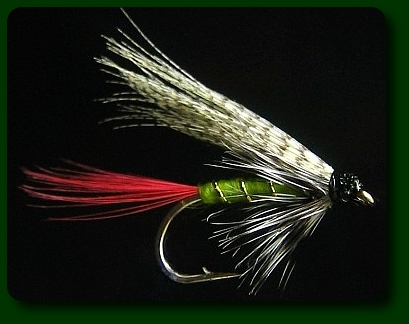
Ultimately, the hook should not be a gimmick. If it is, chances are the reader will be disappointed in the work. Readers will rightly feel cheated. Instead, the hook should offer readers a glimpse of what the rest of the piece promises to give: romance, tragedy, mystery, comedy, philosophical questions, etc. The hook establishes the art of the book. It is the offering the writer makes for the reader's time. The best hide hooks themselves because, like well-tied flies, they feel a natural part of the narrative landscape. When those lures are artfully done, I as the reader will bite every time.
------
PS. (ten minutes later)
After writing this I stumbled across Julie Ritter's poem "Ravi Shankar Hand Dip" at http://pbq.drexel.edu/pbq/archives/462 . Synchronicity?
Quick as a fishhook flared into the water,
the way hip rubs against hip intentionally
unintentional on the dance floor, furtive
as a glance at someone else’s bank
statement, palmed like a cigarette in the rain,
the fingers exploratory, an insect’s antennae,
twitching to capture texture to populate
the hinterlands of a long winter night alone,
a maneuver not catalogued by the Kama Sutra,
but full of nervy frottage, pervy wattage,
a slip of skin on skin thin as a wine glass stem
and more circumspect, harder to unpack
than a tackle box and oft-deployed in subway
cars and murky bars – that’s the hand dip.
Perhaps the problem is the term "hook" itself, which implies the reader is a fish. The reader is not a fish. The reader is an intelligent human being with many demands on his/her time--but in abandoning the term hook, it seems like too many writers also forget this crucial fact of the reader's humanity. Too often, I see writers who seem to feel that the reader owes it to them to slog through pages or attempt to penetrate their word puzzles and mind games just because the writer bothered to write the pages in the first place.
The reader, however, owes the writer nothing. In fact, it's the reverse. If someone has been gracious enough to spend time and money to read our efforts, we owe them.
What I like about the term hook is that the metaphor implies the writer should offer the reader some morsel up front--something we can see and smell and taste just as much as we can see, smell, and taste the barbed hook itself. The writing needs to establish a reason for us readers to willingly sacrifice our time.
Ultimately, the hook should not be a gimmick. If it is, chances are the reader will be disappointed in the work. Readers will rightly feel cheated. Instead, the hook should offer readers a glimpse of what the rest of the piece promises to give: romance, tragedy, mystery, comedy, philosophical questions, etc. The hook establishes the art of the book. It is the offering the writer makes for the reader's time. The best hide hooks themselves because, like well-tied flies, they feel a natural part of the narrative landscape. When those lures are artfully done, I as the reader will bite every time.
------
PS. (ten minutes later)
After writing this I stumbled across Julie Ritter's poem "Ravi Shankar Hand Dip" at http://pbq.drexel.edu/pbq/
Quick as a fishhook flared into the water,
the way hip rubs against hip intentionally
unintentional on the dance floor, furtive
as a glance at someone else’s bank
statement, palmed like a cigarette in the rain,
the fingers exploratory, an insect’s antennae,
twitching to capture texture to populate
the hinterlands of a long winter night alone,
a maneuver not catalogued by the Kama Sutra,
but full of nervy frottage, pervy wattage,
a slip of skin on skin thin as a wine glass stem
and more circumspect, harder to unpack
than a tackle box and oft-deployed in subway
cars and murky bars – that’s the hand dip.
Tuesday, May 29, 2012
Tony Stark, "Gifted" Kid
I took a much-needed family day and saw The Avengers last week. I know I'm supposed to be all highly literary and stuff, and that as such I should probably be looking down my (always too red) nose and saying something caustic and disparaging, but I'm going to go ahead and admit off the bat that I thoroughly enjoyed the film. It's a popcorn movie, not a think-piece, and it embraces what it is without apology.
Which isn't to say that there's nothing thought-provoking about the movie. It was refreshing, for instance, to see scientists Bruce Banner and Tony Stark as heroes. Their alter egos may give them physical strength, but the real power of each of these men comes from their intellect, a too often neglected super power. And at the risk of making a HUGE over-generalization, I started thinking of the two extremes of what "gifted" looks like.
I'll back up here and say that I teach a lot of teachers and future teachers, and we often talk about how to engage gifted students. Often, they argue that you don't really need to work to engage a gifted student's attention. Gifted students, they argue, are self-motivated learners. Give them a task and a deadline, and they'll strive to exceed your expectations.
That's true if you have a Bruce Banner-style gifted kid. Unless some ugly, self-defeating inner turmoil is unleashed, they tend to be quite and studious and well behaved. The Bruce Banners of the world often succeed in even adverse conditions because they want to please. They tend to populate school honor societies and speak on graduation day, the proud valedictorians of their respective classes.
But I tracked into the gifted program myself, and I have since worked with a number of highly gifted students, and as much as teachers like to believe in self-motivation and discipline as inherent personality traits of gifted students, I know the reality is often much closer to Tony Stark. Gifted students are just as often easily bored, arrogant, and difficult to work with. While the Bruce Banners may mild-manneredly accept busy work, the Tony Starks recognize it as a waste of their intelligence, though they may not conceptualize or articulate their resistance as such.
The problem is, our schooling system (both public and private) does not tend to cater well to these students. As teachers are asked to leave no child behind and to focus increasingly on less creative kinds of work that will supposedly help students pass standardized tests--all the while seeing their class sizes continually rise--we're losing the very students who are most likely to be innovative in the face of enormous obstacles. We're losing America's potential leaders and inventors to boredom.
In my college classes, I've often had former high school dropouts re-starting their educations. More often than not, these drop outs are among the most talented students I've had the pleasure of working with--yet their attitudes and defiance had set their teachers against them. And though I'm happy that some of them are making it back to college, I suspect there's a far larger population that never does. I'd like to make a call to recognizing boredom--that is, not challenging students enough--as a prevalent cause of educational attrition. Too many Starks don't find the paths to becoming Iron Men.
Which isn't to say that there's nothing thought-provoking about the movie. It was refreshing, for instance, to see scientists Bruce Banner and Tony Stark as heroes. Their alter egos may give them physical strength, but the real power of each of these men comes from their intellect, a too often neglected super power. And at the risk of making a HUGE over-generalization, I started thinking of the two extremes of what "gifted" looks like.
I'll back up here and say that I teach a lot of teachers and future teachers, and we often talk about how to engage gifted students. Often, they argue that you don't really need to work to engage a gifted student's attention. Gifted students, they argue, are self-motivated learners. Give them a task and a deadline, and they'll strive to exceed your expectations.
That's true if you have a Bruce Banner-style gifted kid. Unless some ugly, self-defeating inner turmoil is unleashed, they tend to be quite and studious and well behaved. The Bruce Banners of the world often succeed in even adverse conditions because they want to please. They tend to populate school honor societies and speak on graduation day, the proud valedictorians of their respective classes.
But I tracked into the gifted program myself, and I have since worked with a number of highly gifted students, and as much as teachers like to believe in self-motivation and discipline as inherent personality traits of gifted students, I know the reality is often much closer to Tony Stark. Gifted students are just as often easily bored, arrogant, and difficult to work with. While the Bruce Banners may mild-manneredly accept busy work, the Tony Starks recognize it as a waste of their intelligence, though they may not conceptualize or articulate their resistance as such.
The problem is, our schooling system (both public and private) does not tend to cater well to these students. As teachers are asked to leave no child behind and to focus increasingly on less creative kinds of work that will supposedly help students pass standardized tests--all the while seeing their class sizes continually rise--we're losing the very students who are most likely to be innovative in the face of enormous obstacles. We're losing America's potential leaders and inventors to boredom.
In my college classes, I've often had former high school dropouts re-starting their educations. More often than not, these drop outs are among the most talented students I've had the pleasure of working with--yet their attitudes and defiance had set their teachers against them. And though I'm happy that some of them are making it back to college, I suspect there's a far larger population that never does. I'd like to make a call to recognizing boredom--that is, not challenging students enough--as a prevalent cause of educational attrition. Too many Starks don't find the paths to becoming Iron Men.
Tuesday, April 10, 2012
A Dragon For Spec Fiction: It's been a good semester, my loves
This semester, I ventured into terra incognita. Worlds unknown and becoming known. I dabbled with magic systems, mingled with strange races, and wielded sharp blades. In short, I taught my first course on writing the speculative fiction novel. Tonight, it came, with the semester, to a bitter sweet end. These students wrote their hearts out this semester, spilling them drop by drop onto the page in the best of all possible ways. They wrote with the passion of the faithful. (There was a curious lack of dragons, but we'll let that pass.)
I've loved teaching this class, which is interesting given its history. The course has never been offered before because, though the department knew there was student interest, no faculty member particularly wanted to read multiple chapters from early drafts of speculative novels. That's just not their bag, baby. And I understand their position. I, too, am a fan of literary fiction. It's what I write and it's what I read, but I think there's something to be said for teaching speculative fiction. So I'm going to say it.
A quick list, as it were, of just a few things writing spec fiction brings out of the students:
1) Passion. The students who took this class were a self-selected group. Many have been working on spec fiction novels from their early teens. These writers were absolutely committed to the job of writing, and dedicated to finding the awesome in their stories. Their passion rejuvenated mine as well, reminding me that, after all, finding the awesome in any story *is* what it's all about.
2) Knowledge. When I teach a standard literary fiction writing class, part of my job is to educate the students about the writing that's out there. Most of the literary writing students know is dated (Faulkner, Fitzgerald, Hemingway), and I have to bring them up to speed with recent trends--something that's difficult to do in a semester when I'm also trying to teach basic writing craft and workshop their stories. In this class, however, the knowledge of the literature was reversed. They know contemporary spec fiction far better than I, so I could teach them about craft while they helped educate me and each other about the current trends in the field. I did a ton of reading to prep for this class, but the students had years of lead time to out-read me. It created a great collaborative dynamic, allowing them to really apply what they knew to the writing they were doing.
3) Willingness to be challenged. I started this class with the premise that, if they were still working on Dragonlance-style fantasy hoping that it would be good enough, they were wrong. (And yes, there were some writers who thought exactly this.) We talked at least about how the field was shifting, how electronic markets and intense competition was driving the quality of writing and invention up, and how they were going to have to be better than they imagined possible to compete. Because they had the passion and the knowledge I mentioned, they drove each other and challenged themselves to levels of extraordinary growth.
4) Invention. Every fiction writer invents, but those working in spec fiction bare a burden of world building that I am happy to forego. The critical thinking these students did about everything (from ecosystems to governments to the cost of magic to space travel) was humbling. I often wished my peers in other departments (Biology, Economics, Physics, etc) could have been there to hear the application of so much college learning to fictional worlds. Fiction allowed these students them a place to put all their learning into action in a way that was truly exciting to behold.
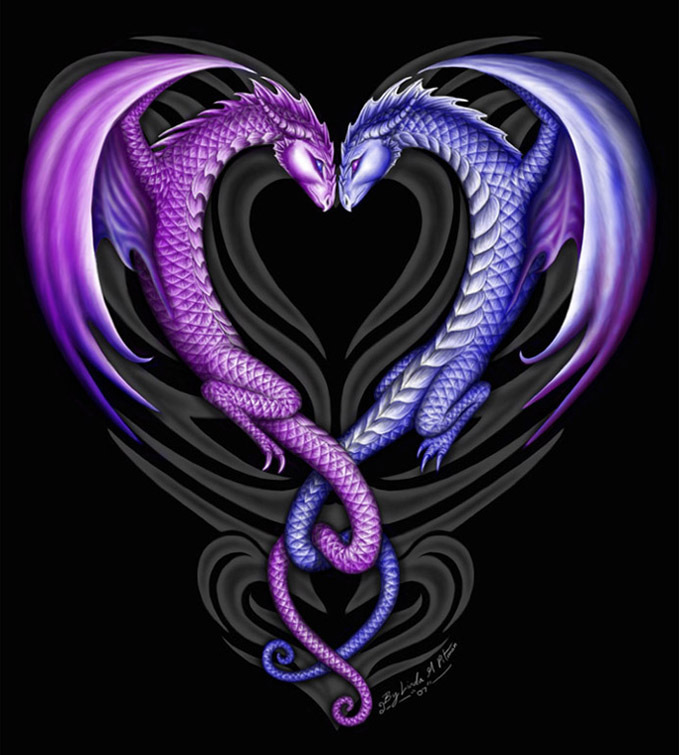
I'm going to miss these kids. And so, here's a dragon heart for them, one that I hope will continue to breathe fire into them as they breathed their infectious passion into all they did this term.
I've loved teaching this class, which is interesting given its history. The course has never been offered before because, though the department knew there was student interest, no faculty member particularly wanted to read multiple chapters from early drafts of speculative novels. That's just not their bag, baby. And I understand their position. I, too, am a fan of literary fiction. It's what I write and it's what I read, but I think there's something to be said for teaching speculative fiction. So I'm going to say it.
A quick list, as it were, of just a few things writing spec fiction brings out of the students:
1) Passion. The students who took this class were a self-selected group. Many have been working on spec fiction novels from their early teens. These writers were absolutely committed to the job of writing, and dedicated to finding the awesome in their stories. Their passion rejuvenated mine as well, reminding me that, after all, finding the awesome in any story *is* what it's all about.
2) Knowledge. When I teach a standard literary fiction writing class, part of my job is to educate the students about the writing that's out there. Most of the literary writing students know is dated (Faulkner, Fitzgerald, Hemingway), and I have to bring them up to speed with recent trends--something that's difficult to do in a semester when I'm also trying to teach basic writing craft and workshop their stories. In this class, however, the knowledge of the literature was reversed. They know contemporary spec fiction far better than I, so I could teach them about craft while they helped educate me and each other about the current trends in the field. I did a ton of reading to prep for this class, but the students had years of lead time to out-read me. It created a great collaborative dynamic, allowing them to really apply what they knew to the writing they were doing.
3) Willingness to be challenged. I started this class with the premise that, if they were still working on Dragonlance-style fantasy hoping that it would be good enough, they were wrong. (And yes, there were some writers who thought exactly this.) We talked at least about how the field was shifting, how electronic markets and intense competition was driving the quality of writing and invention up, and how they were going to have to be better than they imagined possible to compete. Because they had the passion and the knowledge I mentioned, they drove each other and challenged themselves to levels of extraordinary growth.
4) Invention. Every fiction writer invents, but those working in spec fiction bare a burden of world building that I am happy to forego. The critical thinking these students did about everything (from ecosystems to governments to the cost of magic to space travel) was humbling. I often wished my peers in other departments (Biology, Economics, Physics, etc) could have been there to hear the application of so much college learning to fictional worlds. Fiction allowed these students them a place to put all their learning into action in a way that was truly exciting to behold.
I'm going to miss these kids. And so, here's a dragon heart for them, one that I hope will continue to breathe fire into them as they breathed their infectious passion into all they did this term.
Sunday, April 8, 2012
The Night Circus
Recently, The New York Times published "Your Brain on Fiction," an article that examined the neuroscience of reading imaginative literature, reporting that reading about smells and actions stimulates the brain in the same way that living those experiences does. In short, our brains treat the fiction as reality, showing that our long-standing metaphor of fiction bringing new worlds to life is, in terms of brain function, a literal as well as figurative truth. The article ends with the following lines: "Reading great literature, it has long been averred, enlarges and improves us as human beings. Brain science shows this claim is truer than we imagined."
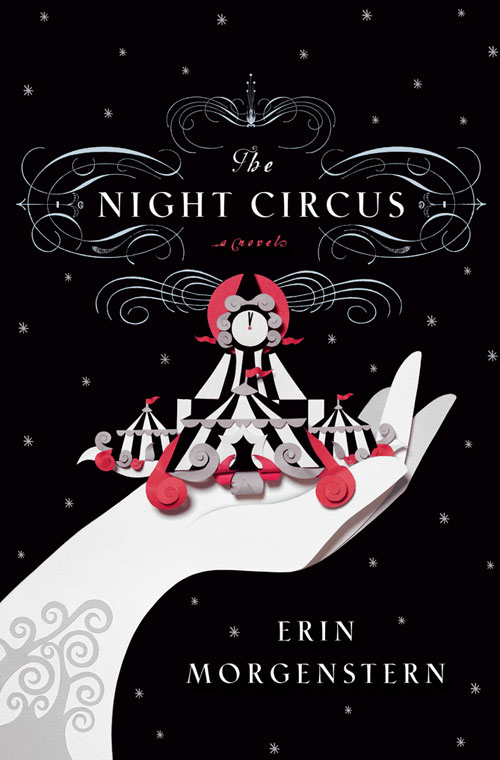
A friend of mine forwarded The New York Times article to me as I was reading Erin Morgenstern's debut novel The Night Circus, and if there was ever an invented world you might be glad to descend into and live in a while, this is it. Morgenstern's novel is rich in precisely the kind of detail most likely to stimulate our minds: the dark caramel of a coated apple, the scent of popcorn on a clear night. Her novel imagines for us a circus more amazing than the most wonderful we've been to and brings the place to life through rich images that leave our mouths watering.
I've heard that the seeds for this novel began not with character or plot but with setting, the circus itself, and I believe it. Morgenstern peppers the novel with brief second person chapters that invite us in to new tents and passage ways. These moments reminded me strongly of Italo Calvino's Invisible Cities both in their image-driven beauty and their poetic language. (OK, maybe not quite so poetic as Calvino, but that would be setting the bar impossibly high, would it not? But they are rich and beautiful and finely wrought.)
What grounds the novel is the plot and characters that Morgenstern applied once she had created this amazing circus. Whereas Calvino's prose poetry collection is very loosely "plotted" with the story of Marco Polo explaining the places he's been to Kublai Khan, The Night Circus is more firmly grounded in a magicians' battle. Two children have been bound against their wills to compete for magical supremacy and the circus is their venue, the place where they test their skills against one another by creating ever more fantastical tents.
The result is a high interest page-turner with a literary quality, a novel that those who love fantasy and those who love language can enjoy equally.
A friend of mine forwarded The New York Times article to me as I was reading Erin Morgenstern's debut novel The Night Circus, and if there was ever an invented world you might be glad to descend into and live in a while, this is it. Morgenstern's novel is rich in precisely the kind of detail most likely to stimulate our minds: the dark caramel of a coated apple, the scent of popcorn on a clear night. Her novel imagines for us a circus more amazing than the most wonderful we've been to and brings the place to life through rich images that leave our mouths watering.
I've heard that the seeds for this novel began not with character or plot but with setting, the circus itself, and I believe it. Morgenstern peppers the novel with brief second person chapters that invite us in to new tents and passage ways. These moments reminded me strongly of Italo Calvino's Invisible Cities both in their image-driven beauty and their poetic language. (OK, maybe not quite so poetic as Calvino, but that would be setting the bar impossibly high, would it not? But they are rich and beautiful and finely wrought.)
What grounds the novel is the plot and characters that Morgenstern applied once she had created this amazing circus. Whereas Calvino's prose poetry collection is very loosely "plotted" with the story of Marco Polo explaining the places he's been to Kublai Khan, The Night Circus is more firmly grounded in a magicians' battle. Two children have been bound against their wills to compete for magical supremacy and the circus is their venue, the place where they test their skills against one another by creating ever more fantastical tents.
The result is a high interest page-turner with a literary quality, a novel that those who love fantasy and those who love language can enjoy equally.
Subscribe to:
Posts (Atom)