I wanted to say a few more words about "New Yorker Rejects Itself."
Shortly after The Review Review's story on the New Yorker rejecting one of its own previously published stories, Slate published this rebuttal, in which David Haglund argues that big journals have no time to respond to plagiarism with
anything more than a form rejection. Thus, he suggests the journals recognized
the piece from the start. Unfortunately, he offers no evidence to support this assertion.
My own experience (one year of working
as a graduate assistant at the Georgia Review) contradicts Haglund's argument. The editors were as time crunched as any, yet they treated plagiarism with the utmost seriousness. They would definitely have contacted the author of a
plagiarized submission had they recognized it--and would have told that author never to
darken their door again. And I'm not just guessing that this is the case. While working there, I found a story that had lifted a line from a story I knew. I brought it to the associate editor's attention and watched the result first hand. What's interesting is that the Haglund does not seem to have asked the editors at the New Yorker what policies
they have and follow regarding plagiarism. He only speculates.
Though Haglund's defense is based on speculation, I do think the New Yorker's rejection of a New Yorker story is defensible on different, more modest grounds. Every journal has
its own style and space limitations. Just
because a piece suited the taste of one editor at one magazine, no law states it
must naturally suit all other editors' tastes as well. One New Yorker slush reader may have loved the story in the past and passed it up the chain. Another didn't. Or they did but this time, the story was up against unusually stiff competition and didn't make the cut. That hurts, but I understand that those decisions are part of the business.
What's less defensible and also sadly true is this: literary fiction magazines must sell copies to stay in business. Why else would Esquire publish this bit of dross by James Franco? Or Ploughshares for that matter? Why else would Graywolf accept his collection? Franco may not be a talented writer, but his name will sell copies. I won't launch into my full Franco rant, but this is where I get conflicted because, generally, yes, I feel optimistic about the business. I feel that if we strive and try long enough, we can make it. I wasn't simply blowing smoke when I wrote last week's post. But Franco still stares me in the face, contradicting that faith.
Here's what I don't know: will Franco sell enough copies to allow Graywolf to take a chance on an unknown writer? Will his name work like a carbon offset? Will Graywolf purge itself of the pollution of his poetry by taking on more projects from the kind of writers it has long been respected for--namely, the little known literary talent? Did Esquire and Ploughshares bring other writers, more talented but less known, into public awareness because they were in the same issue as his piece?
And I'm asking sincerely, because I do want to stay optimistic. And also because it fits with my experience with editors so far--including the many who've rejected me--which is that they care passionately about words and art and have suffered many years of low paychecks and long days to give that art a forum. I know that optimism tends to be read as naivete or, worse, stupidity, but the questions we face as writers are too easily written off with cynicism. It's equally simple-minded to be passively jaded or actively angry because of one instance of rejection. There is no one kind of editor or journal or publisher--and thank God for that. Every day, people sit down to their work at small presses and magazines and attend to their business with the same passion with which I sit down to my own work.
The truth is, I have no idea what goes on in the New Yorker's editorial office. I hope and suspect they still are driven by passion, but I don't know firsthand, and it's fruitless to speculate. And you know what? At the end of the day, fretting over what they do or don't publish only distracts me from my own part of the writing business, the humble business of sitting my bottom in a chair, placing my hands on the keyboard, and writing.
Showing posts with label literary fiction. Show all posts
Showing posts with label literary fiction. Show all posts
Sunday, March 31, 2013


Sunday, March 24, 2013
Why I Should Not Have a "Career" (and why I do)
I've seen a lot of gloom and doom lately about the state of the literary publications market. Last week, for example, The Review Review published a story aptly titled "New Yorker Rejects Itself" in which the author takes a lesser known New Yorker story, replaces the author's name with an invented one, and submits it for publication there and several other highly regarded journals. At each one, it is rejected.
My friend Jeff Newberry (author of Brackish) saw the article and said it reminded him of this piece from OneHundredRejections.com, in which a novelist resubmits his own best-selling novel (name & title changed) to his own publishing house's slush pile, only to have it rejected.
Both articles seemed to confirm what so many of us feel in our darkest hours. It was the old Catch-22. Namely, that the odds are impossibly stacked against us, that one can't get published without a name and one can't get a name without publishing.
In the face of such stories, it's easy to give up hope. As painful as writing is, why keep doing it if there's no chance it will reach an audience outside ourselves? Why did we sign on for this? Where is that bottle of Bourbon?
I've been there. Sometimes, I admit, I still feel that way. I talked to an author last summer whose first short story collection is garnering huge praise everywhere (major awards and prizes, full color spreads in popular magazines, etc, etc), who told me that she had never had her work in the slush pile. A few years ago, her MFA director had told a highly reputed literary magazine's editor-in-chief to look at her work, which he did. That editor published her story, and her career was off and running. Sometimes, editors asked her to send to them directly. Sometimes, friends put her work in their hands. Either way, her stories skipped the slush pile altogether.
The thing is, I know that kind of treatment doesn't happen unless you have incredible talent, and, knowing that, I wanted to be happy for her. This writer struck me as a thoroughly cool person. As fellow strivers, shouldn't we all be cheering each other on?
Instead, I felt the cold gut punch of jealousy. There was no one in my life who had that kind of clout, no one willing to stick his neck out that way for me. I was doomed.
I got over it. She is talented and amazing. I don't want to be a bitter, jealous person. I want to cheer her on sincerely because she, too, is a writer, and even if publication might have come a little easier in the end, the words never do. She got her reputation because she sat down to the keyboard like all the rest of us and wrestled phrases and images into the magical spell that is all good short fiction. She worked--and that's something none of us should take lightly.
What's more, I've come to see it as much role as a writer much differently. I'm not a person who's ever known people in high places. My role, instead, is to claw and scratch my way through the backdoor of the publication world. And I have. I've gotten pieces in journals I'm incredibly proud to be in (Ninth Letter, Quarterly West, Versal, etc)--places whose editors were willing to take a chance on a girl they'd never heard of just because they liked her words. My first novel is coming out from New Rivers Press in October--the same press that published Charles Baxter, one of my all time favorite writers--for the same reason. Somehow, over time, my work has begun to find an audience.
I'm going to be honest: back in those undergrad days, my writing did not stood out above that of my peers. I had no discernible talent. By the time I began my Master's degree, I recognized how poor my own writing was compared to my peers. I spent the next six years struggling to be better. Slowly, my work was starting to get acceptance letters.
What I have going for me isn't untrained ability, and it certainly isn't "connections." What I have is perseverance and a willingness to learn. What I have going for me is a world in which editors do care and do want to find new voices. What I have going for me is a writing community of people who support each other, even when things look bleak. And you know what? It's enough.
My friend Jeff Newberry (author of Brackish) saw the article and said it reminded him of this piece from OneHundredRejections.com, in which a novelist resubmits his own best-selling novel (name & title changed) to his own publishing house's slush pile, only to have it rejected.
Both articles seemed to confirm what so many of us feel in our darkest hours. It was the old Catch-22. Namely, that the odds are impossibly stacked against us, that one can't get published without a name and one can't get a name without publishing.
In the face of such stories, it's easy to give up hope. As painful as writing is, why keep doing it if there's no chance it will reach an audience outside ourselves? Why did we sign on for this? Where is that bottle of Bourbon?
I've been there. Sometimes, I admit, I still feel that way. I talked to an author last summer whose first short story collection is garnering huge praise everywhere (major awards and prizes, full color spreads in popular magazines, etc, etc), who told me that she had never had her work in the slush pile. A few years ago, her MFA director had told a highly reputed literary magazine's editor-in-chief to look at her work, which he did. That editor published her story, and her career was off and running. Sometimes, editors asked her to send to them directly. Sometimes, friends put her work in their hands. Either way, her stories skipped the slush pile altogether.
The thing is, I know that kind of treatment doesn't happen unless you have incredible talent, and, knowing that, I wanted to be happy for her. This writer struck me as a thoroughly cool person. As fellow strivers, shouldn't we all be cheering each other on?
Instead, I felt the cold gut punch of jealousy. There was no one in my life who had that kind of clout, no one willing to stick his neck out that way for me. I was doomed.
I got over it. She is talented and amazing. I don't want to be a bitter, jealous person. I want to cheer her on sincerely because she, too, is a writer, and even if publication might have come a little easier in the end, the words never do. She got her reputation because she sat down to the keyboard like all the rest of us and wrestled phrases and images into the magical spell that is all good short fiction. She worked--and that's something none of us should take lightly.
What's more, I've come to see it as much role as a writer much differently. I'm not a person who's ever known people in high places. My role, instead, is to claw and scratch my way through the backdoor of the publication world. And I have. I've gotten pieces in journals I'm incredibly proud to be in (Ninth Letter, Quarterly West, Versal, etc)--places whose editors were willing to take a chance on a girl they'd never heard of just because they liked her words. My first novel is coming out from New Rivers Press in October--the same press that published Charles Baxter, one of my all time favorite writers--for the same reason. Somehow, over time, my work has begun to find an audience.
I'm going to be honest: back in those undergrad days, my writing did not stood out above that of my peers. I had no discernible talent. By the time I began my Master's degree, I recognized how poor my own writing was compared to my peers. I spent the next six years struggling to be better. Slowly, my work was starting to get acceptance letters.
What I have going for me isn't untrained ability, and it certainly isn't "connections." What I have is perseverance and a willingness to learn. What I have going for me is a world in which editors do care and do want to find new voices. What I have going for me is a writing community of people who support each other, even when things look bleak. And you know what? It's enough.
Friday, March 8, 2013
Literary vs. Commercial: A Panel Report from AWP 2013
Yesterday, I went to a talk on bridging the gap between
“commercial” and “literary” novels. The speakers (Ed Falco, Julianna Baggott,
Lisa Haines, and Benjamin Percy) were phenomenal. They were the kinds of
writers you want to be friends with so you could sit over beers late at night
talking about favorite books. They were all that a panel should be—funny and insightful,
approachable but authoritative—and they made a number of comments that I’ve
been mulling over ever since. For example, I liked Ed Falco’s point that we
should not be judging books by genre but by quality. He rightly argued that
there are badly written literary genre books and well-written commercial ones,
and that the quality of goodness or badness in the writing itself (rather than
genre) should determine how we judge it. He said that the text, once done and
sent to the publisher, is not inherently “literary” or “commercial.” It’s the
author’s attitude when writing the book that puts it there. If you’re thinking
only about your needs as an author and what you feel you must write, you are
writing from a literary impulse, but if you are thinking about the audience and
how the book might appeal to them, then your impulse is commercial.
Perhaps it is because
I agree with him that I found the question and answer portion of the talk to be
a bit frustrating. A young writer behind me asked about how the
literary/commercial distinction affected the writing of the book—a good meaty
process question—and the panelists (I want to attribute this answer mostly to
Haines and Baggott, but more might have chimed in) responded that you write
what you feel you must write,
ignoring the generic question altogether. I am sure this answer feels utterly
true to them, and I’m also sure that it is the best answer available, but I
have to say, I can’t help but recognize it as an oversimplification. After all,
anyone who has written creatively has faced the wealth of artistic choices,
each beckoning with its own siren song. We have ridden through the yellow wood
and faced, over and over again, the divergent paths. Sometimes, the street
signs on those paths might as well be labeled “commercial” and “literary.” They
lead us to different ends, but it isn’t always clear which is the better path.
Let’s be honest: our choices determine the book’s audience
and the level of respect it earns with The
New York Times book review or, as Haines pointed out, a tenure committee. Haines
and Baggott both said that their most commercially successful books were left
off their academic CVs or listed as supplementary to their other work because
they knew those books would hurt rather than help their cause, and failure to
make tenure means the loss of a job and the primary means to feed the family.
I’ve been at the cross roads with my second novel now for the
past few months, trying to decide exactly how gritty, how “real,” I want this
book to be, knowing that making it too gritty may not appeal to young adult
readers who are likely to be its primary audience. The creative genies have yet
to come to tell me which path I should take, and this fence rail has long
become uncomfortable.
Who was it who said “the truth is rarely pure and never
simple?” That’s the message I wish the panel had given the young writer in the
audience struggling at her own crossroads. And maybe if they hadn’t been on the
spot, under pressure to give the quick answer, they would have. Or maybe I am
projecting too much. Maybe the choices have always been clearer for them.
Haines and Baggott, after all, are talented and prolific—far more so than I am.
Maybe they don’t get stuck on these questions as I am and have been. Maybe they
don’t wallow in indecision. Maybe that’s the heart of genius.
Since I am not a genius, though, I will simply say this to
that fellow writer and struggler who asked her bold question: many of us share
your doubt. The answer Baggott and Haines gave is undoubtedly right—we must determine
the road by being true to our work. Yet I come back to Falco (silent during
this portion of the Q&A) who said that it is during process that we find
ourselves following a literary or commercial impulse. Sometimes, those two
masters give contradictory orders, and the writer must determine which s/he
serves. The choice is rarely pure and never simple.
Friday, August 3, 2012
Plot, Structure, Through Line
From the 2012 Sewanee Writers' Conference
The other day, I was standing in a line of writers at Sterling's waiting to get a hazelnut latte when I heard two others talking about their workshop. "How did it go?" writer #1 asked. "Great," writer #2 said. "We talked a lot about plot. You know, it's funny, but we don't tend to talk a lot about plot in writing workshops. We talk about structure, but not plot."
Yesterday, I was listing to the Tin House writing podcast as I went for my morning run, and the subject of plot came up again. Steve Almond and Aimee Bender talked over many pitfalls writers face, one of which is giving a character problems (terminal illness, dying parents, etc) out of fear that if we don't, there will be no plot. Bender quoted Ray Bradbury, "plot is no more than the foot prints in the snow left after your characters have run by." (I believe she left out the end of that quotation, which is "on the way to incredible destinations." I suspect that ending is crucial for Bradbury [ahem, dinosuars; ahem, book burning--Bradbury is not exactly plot-light], but I'll leave it aside for now.)

In my own workshop with John Casey and Christine Schutt, one of the workshop participants mentioned a narrative having a "through line." Casey asked if through line meant the same as plot and the writer answered that no, he thought it dealt more with an idea running though the work (what we might also call theme).
With all this in the air, I've been thinking about the collision and collusion of our definitions of plot, structure, and through line, so I thought I'd do a little Internet browsing this morning to see what Dr. Google had to bring to the table.
I have to admit, my own definition of "through line" (admittedly one I invented from the contexts in which I'd heard the word rather than on scholarship) has much more to do with narrative threads and arcs than strictly themes. For me, the through line is closer to one of Aristotle's unities. For him, time and space helped define the story and give it a kind of cohesion. As we've abandoned that unity and opened narrative to longer forms, we've needed to find substitute unities. Yes, a story's themes are among these threads, but I would say characters, too, can be threads running through a story. Dickens, for example, wrote a cast of characters who were related in surprising and often absurd ways. As we've become increasing suspicious of coincidence, recurring images have added another thread. Asked to define a through line, I would have said that, like any good rope, it is a braiding of all these threads and to form the line that ultimately pulls us over the narrative arc (which I'm using here as almost synonymous with plot).

Thus, for me, a through line combines elements of character, imagery, thematics, etc to pull us over this mountain:

But checking in with Wikipedia this morning, I found that my definition, though pretty, is not accurate either. It offers this:
"The through line, sometimes also called the spine, was first suggested by Constantin Stanislavski as a simplified way for actors to think about characterisation [sic]. He believed actors should not only understand what their character was doing, or trying to do, (their objective) in any given unit, but should also strive to understand the through line which linked these objectives together and thus pushed the character forward through the narrative."
Here, the through line resides strictly in character and motivation, but if we lay Bradbury's quotation ("plot is [...] the foot prints in the snow left [by] characters") alongside this, we find ourselves back at the deep and abiding relation of plot to character.
A Google request for a definition of plot added this:
Now, I realize of course that this is not how writers tend to use the word "plot," but I kind of love the idea that something subversive is going on here. Hopefully, our plots are not illegal or harmful outside of the world of the fiction (honestly, I hope my writing aspires to do more good than harm), but it seems to me that, while writers may have a plan for our book, it often feels like something outside of us, something residing in the art itself, will not always allow us to follow that plan. Our characters don't always behave themselves. The subvert and foil our best laid plans. I'll argue that this is a good thing--a sign that we've just started to make the characters complex enough. The through line may be a way to simplify their personality into something comprehensible for a actor or writer, but it should never serve to make their actions any less authentically human, and therefore, surprising.
I'm no closer to parsing these definitions into neatly defined territories than I was was when I began writing this post, but somehow, I find the blur between these elements deeply satisfying and far more useful than easy classification would be.
The other day, I was standing in a line of writers at Sterling's waiting to get a hazelnut latte when I heard two others talking about their workshop. "How did it go?" writer #1 asked. "Great," writer #2 said. "We talked a lot about plot. You know, it's funny, but we don't tend to talk a lot about plot in writing workshops. We talk about structure, but not plot."
Yesterday, I was listing to the Tin House writing podcast as I went for my morning run, and the subject of plot came up again. Steve Almond and Aimee Bender talked over many pitfalls writers face, one of which is giving a character problems (terminal illness, dying parents, etc) out of fear that if we don't, there will be no plot. Bender quoted Ray Bradbury, "plot is no more than the foot prints in the snow left after your characters have run by." (I believe she left out the end of that quotation, which is "on the way to incredible destinations." I suspect that ending is crucial for Bradbury [ahem, dinosuars; ahem, book burning--Bradbury is not exactly plot-light], but I'll leave it aside for now.)
In my own workshop with John Casey and Christine Schutt, one of the workshop participants mentioned a narrative having a "through line." Casey asked if through line meant the same as plot and the writer answered that no, he thought it dealt more with an idea running though the work (what we might also call theme).
With all this in the air, I've been thinking about the collision and collusion of our definitions of plot, structure, and through line, so I thought I'd do a little Internet browsing this morning to see what Dr. Google had to bring to the table.
I have to admit, my own definition of "through line" (admittedly one I invented from the contexts in which I'd heard the word rather than on scholarship) has much more to do with narrative threads and arcs than strictly themes. For me, the through line is closer to one of Aristotle's unities. For him, time and space helped define the story and give it a kind of cohesion. As we've abandoned that unity and opened narrative to longer forms, we've needed to find substitute unities. Yes, a story's themes are among these threads, but I would say characters, too, can be threads running through a story. Dickens, for example, wrote a cast of characters who were related in surprising and often absurd ways. As we've become increasing suspicious of coincidence, recurring images have added another thread. Asked to define a through line, I would have said that, like any good rope, it is a braiding of all these threads and to form the line that ultimately pulls us over the narrative arc (which I'm using here as almost synonymous with plot).
Thus, for me, a through line combines elements of character, imagery, thematics, etc to pull us over this mountain:
But checking in with Wikipedia this morning, I found that my definition, though pretty, is not accurate either. It offers this:
"The through line, sometimes also called the spine, was first suggested by Constantin Stanislavski as a simplified way for actors to think about characterisation [sic]. He believed actors should not only understand what their character was doing, or trying to do, (their objective) in any given unit, but should also strive to understand the through line which linked these objectives together and thus pushed the character forward through the narrative."
Here, the through line resides strictly in character and motivation, but if we lay Bradbury's quotation ("plot is [...] the foot prints in the snow left [by] characters") alongside this, we find ourselves back at the deep and abiding relation of plot to character.
A Google request for a definition of plot added this:
plot/plät/
| Noun: |
|
Now, I realize of course that this is not how writers tend to use the word "plot," but I kind of love the idea that something subversive is going on here. Hopefully, our plots are not illegal or harmful outside of the world of the fiction (honestly, I hope my writing aspires to do more good than harm), but it seems to me that, while writers may have a plan for our book, it often feels like something outside of us, something residing in the art itself, will not always allow us to follow that plan. Our characters don't always behave themselves. The subvert and foil our best laid plans. I'll argue that this is a good thing--a sign that we've just started to make the characters complex enough. The through line may be a way to simplify their personality into something comprehensible for a actor or writer, but it should never serve to make their actions any less authentically human, and therefore, surprising.
I'm no closer to parsing these definitions into neatly defined territories than I was was when I began writing this post, but somehow, I find the blur between these elements deeply satisfying and far more useful than easy classification would be.
Friday, June 22, 2012
In Defense of the Hook
It seems like it has become morally suspect to suggest that a book, essay, or story should have a "hook." The implication seems to be that it's a contrivance or a gimmick, and as such, I understand why it has become unfashionable to use the term. Still, I think there is something to be said for thinking in terms of a "hook," and so I'll try to say that something.

Perhaps the problem is the term "hook" itself, which implies the reader is a fish. The reader is not a fish. The reader is an intelligent human being with many demands on his/her time--but in abandoning the term hook, it seems like too many writers also forget this crucial fact of the reader's humanity. Too often, I see writers who seem to feel that the reader owes it to them to slog through pages or attempt to penetrate their word puzzles and mind games just because the writer bothered to write the pages in the first place.
The reader, however, owes the writer nothing. In fact, it's the reverse. If someone has been gracious enough to spend time and money to read our efforts, we owe them.
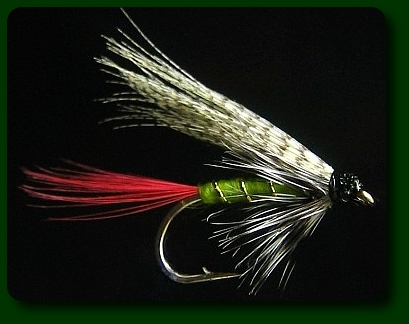
What I like about the term hook is that the metaphor implies the writer should offer the reader some morsel up front--something we can see and smell and taste just as much as we can see, smell, and taste the barbed hook itself. The writing needs to establish a reason for us readers to willingly sacrifice our time.
Ultimately, the hook should not be a gimmick. If it is, chances are the reader will be disappointed in the work. Readers will rightly feel cheated. Instead, the hook should offer readers a glimpse of what the rest of the piece promises to give: romance, tragedy, mystery, comedy, philosophical questions, etc. The hook establishes the art of the book. It is the offering the writer makes for the reader's time. The best hide hooks themselves because, like well-tied flies, they feel a natural part of the narrative landscape. When those lures are artfully done, I as the reader will bite every time.

------
PS. (ten minutes later)
After writing this I stumbled across Julie Ritter's poem "Ravi Shankar Hand Dip" at http://pbq.drexel.edu/pbq/archives/462 . Synchronicity?
Quick as a fishhook flared into the water,
the way hip rubs against hip intentionally
unintentional on the dance floor, furtive
as a glance at someone else’s bank
statement, palmed like a cigarette in the rain,
the fingers exploratory, an insect’s antennae,
twitching to capture texture to populate
the hinterlands of a long winter night alone,
a maneuver not catalogued by the Kama Sutra,
but full of nervy frottage, pervy wattage,
a slip of skin on skin thin as a wine glass stem
and more circumspect, harder to unpack
than a tackle box and oft-deployed in subway
cars and murky bars – that’s the hand dip.
Perhaps the problem is the term "hook" itself, which implies the reader is a fish. The reader is not a fish. The reader is an intelligent human being with many demands on his/her time--but in abandoning the term hook, it seems like too many writers also forget this crucial fact of the reader's humanity. Too often, I see writers who seem to feel that the reader owes it to them to slog through pages or attempt to penetrate their word puzzles and mind games just because the writer bothered to write the pages in the first place.
The reader, however, owes the writer nothing. In fact, it's the reverse. If someone has been gracious enough to spend time and money to read our efforts, we owe them.
What I like about the term hook is that the metaphor implies the writer should offer the reader some morsel up front--something we can see and smell and taste just as much as we can see, smell, and taste the barbed hook itself. The writing needs to establish a reason for us readers to willingly sacrifice our time.
Ultimately, the hook should not be a gimmick. If it is, chances are the reader will be disappointed in the work. Readers will rightly feel cheated. Instead, the hook should offer readers a glimpse of what the rest of the piece promises to give: romance, tragedy, mystery, comedy, philosophical questions, etc. The hook establishes the art of the book. It is the offering the writer makes for the reader's time. The best hide hooks themselves because, like well-tied flies, they feel a natural part of the narrative landscape. When those lures are artfully done, I as the reader will bite every time.
------
PS. (ten minutes later)
After writing this I stumbled across Julie Ritter's poem "Ravi Shankar Hand Dip" at http://pbq.drexel.edu/pbq/
Quick as a fishhook flared into the water,
the way hip rubs against hip intentionally
unintentional on the dance floor, furtive
as a glance at someone else’s bank
statement, palmed like a cigarette in the rain,
the fingers exploratory, an insect’s antennae,
twitching to capture texture to populate
the hinterlands of a long winter night alone,
a maneuver not catalogued by the Kama Sutra,
but full of nervy frottage, pervy wattage,
a slip of skin on skin thin as a wine glass stem
and more circumspect, harder to unpack
than a tackle box and oft-deployed in subway
cars and murky bars – that’s the hand dip.
Sunday, April 8, 2012
The Night Circus
Recently, The New York Times published "Your Brain on Fiction," an article that examined the neuroscience of reading imaginative literature, reporting that reading about smells and actions stimulates the brain in the same way that living those experiences does. In short, our brains treat the fiction as reality, showing that our long-standing metaphor of fiction bringing new worlds to life is, in terms of brain function, a literal as well as figurative truth. The article ends with the following lines: "Reading great literature, it has long been averred, enlarges and improves us as human beings. Brain science shows this claim is truer than we imagined."
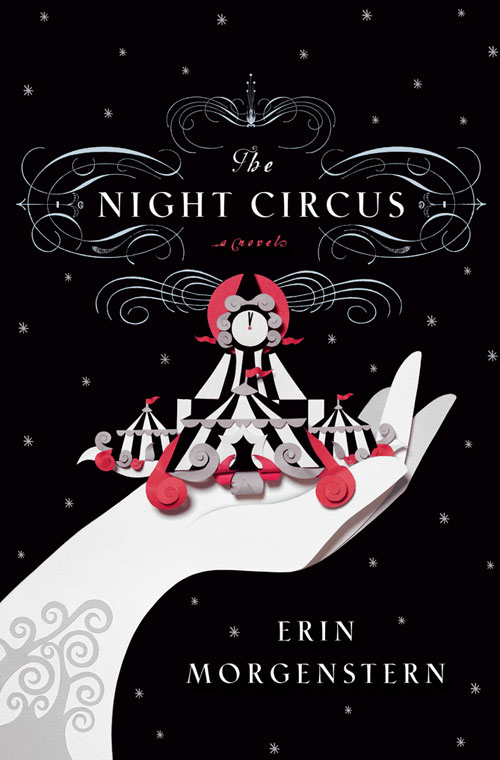 A friend of mine forwarded The New York Times article to me as I was reading Erin Morgenstern's debut novel The Night Circus, and if there was ever an invented world you might be glad to descend into and live in a while, this is it. Morgenstern's novel is rich in precisely the kind of detail most likely to stimulate our minds: the dark caramel of a coated apple, the scent of popcorn on a clear night. Her novel imagines for us a circus more amazing than the most wonderful we've been to and brings the place to life through rich images that leave our mouths watering.
I've heard that the seeds for this novel began not with character or plot but with setting, the circus itself, and I believe it. Morgenstern peppers the novel with brief second person chapters that invite us in to new tents and passage ways. These moments reminded me strongly of Italo Calvino's Invisible Cities both in their image-driven beauty and their poetic language. (OK, maybe not quite so poetic as Calvino, but that would be setting the bar impossibly high, would it not? But they are rich and beautiful and finely wrought.)
What grounds the novel is the plot and characters that Morgenstern applied once she had created this amazing circus. Whereas Calvino's prose poetry collection is very loosely "plotted" with the story of Marco Polo explaining the places he's been to Kublai Khan, The Night Circus is more firmly grounded in a magicians' battle. Two children have been bound against their wills to compete for magical supremacy and the circus is their venue, the place where they test their skills against one another by creating ever more fantastical tents.
The result is a high interest page-turner with a literary quality, a novel that those who love fantasy and those who love language can enjoy equally.
I've heard that the seeds for this novel began not with character or plot but with setting, the circus itself, and I believe it. Morgenstern peppers the novel with brief second person chapters that invite us in to new tents and passage ways. These moments reminded me strongly of Italo Calvino's Invisible Cities both in their image-driven beauty and their poetic language. (OK, maybe not quite so poetic as Calvino, but that would be setting the bar impossibly high, would it not? But they are rich and beautiful and finely wrought.)
What grounds the novel is the plot and characters that Morgenstern applied once she had created this amazing circus. Whereas Calvino's prose poetry collection is very loosely "plotted" with the story of Marco Polo explaining the places he's been to Kublai Khan, The Night Circus is more firmly grounded in a magicians' battle. Two children have been bound against their wills to compete for magical supremacy and the circus is their venue, the place where they test their skills against one another by creating ever more fantastical tents.
The result is a high interest page-turner with a literary quality, a novel that those who love fantasy and those who love language can enjoy equally.
Subscribe to:
Posts (Atom)